• Home
  • About
  • Contact Us
  • The World of THE WAR FOR CHRISTENDOM
  • On the Current Crisis
  • A Return to a Sane World: Legitimist Manifesto
  • Related Links

The War for Christendom

~ Center for Legitimist Documentation

The War for Christendom

Tag Archives: christendom

New Essay at The European Conservative: “The Forgotten European”

02 Friday Feb 2024

Posted by Matthew Scarince in Christendom

≈ 1 Comment

Tags

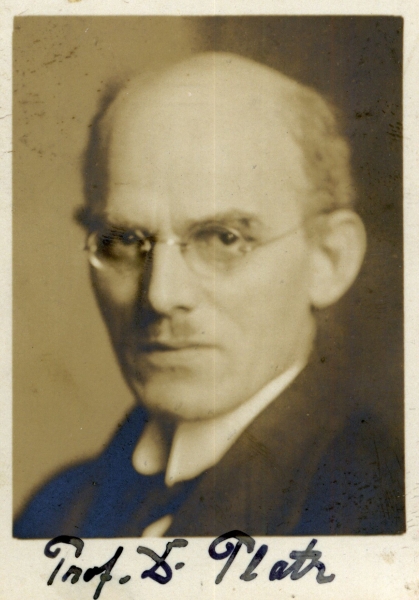
Abendland, Catholicism, christendom, Europe, European Union, Hermann Platz, Otto von Habsburg

ary_scheffer_charlemagne_recoit_la_soumission_de_widukind_a_paderborn_1840

My essay “The Forgotten European: Hermann Platz’s Vision for Peace” was recently published by The European Conservative. Here’s an excerpt from the introduction:

In this day and age, when the alarms of war are once again sounding their mournful message of death—when the postwar vision of a peaceful and united Europe seems as distant as the utopian hopes surrounding the first League of Nations—it might seem strange to write about an obscure German professor of Romance Languages who never held a significant public office until the last few weeks before his death. Hermann Platz was a humble man of grand ideas, yet he never lived to see even the first inklings of his plans unfold, as he died after a botched throat operation. His name has been consigned to the most obscure corner of academic history, forgotten by most of the people whose lives were shaped by his vision. Yet his message of unity and peace founded on man’s supernatural calling endures even today.

Read the whole essay here: https://europeanconservative.com/articles/essay/the-forgotten-european-hermann-platzs-vision-for-peace/

New Essay at New Polity: “Pagan Laws and the People of God”

19 Sunday Nov 2023

Posted by Matthew Scarince in Christendom

≈ 6 Comments

Tags

christendom, Classical Legal Tradition, Modern State, New Polity, Paganism, People of God, Political Philosophy, Political Theology

Screen+Shot+2023-11-17+at+11.33.47+AM

New Polity: A Journal of Postliberal Thought recently published my essay “Pagan Laws and the People of God.” Here is an excerpt from the introduction, you can read the whole essay by purchasing the issue or subscribing to the journal here.

The dawn that dispelled the horrendous night that morn
Was not a Sabbath of rest but a Saturnalia of sorrow
The impious demon rejoiced in seeing the breach of peace between brothers
There never was greater slaughter, nor field so full of war
The laws of Christendom are turned into a rain of blood.
Thus the gluttony of Cerberus pleases the infernal powers.

— Angelbert, Versus de bella que fuit acta Fontaneto

These poignant verses describe the aftermath of the Battle of Fontenoy, a decisive moment in the fratricidal war between the three grandsons of Charlemagne. In the eyes of the Frankish poet, the order of the Lex Christianorum—the reign of peace—had given way to the old blood-soaked anarchy of paganism; the divinely instituted leisure of the Sabbath had yielded to a Saturnalia of debauchery. These verses could equally well describe the situation of Catholics in the modern administrative state, a model of state which has come to dominate the political life of many countries. The atrocities of the modern state are without number; for example, in America, until very recently, this form of state sanctioned at its highest levels the mass destruction of innocents in the womb. A growing school of postliberal “juridical thinkers” blame our moral and spiritual decay on the refusal to ground our law in the “Classical Legal Tradition.” They claim that the basic apparatus of the modern state is merely abused; politicians educated in the tradition of classical legal thought can and should adopt “the apparatus of the administrative state” to successfully adapt and adjust “broad positive instruments to changing social, economic, and technological circumstances.” This claim (and the booming juristic community that has rallied around it) lacks any sense of the traditional perspective which pits Catholic society and the Western European tradition of governance against the depredations of the pagan civilizations that it converted and conquered. From this perspective, the modern administrative state has revived the despotism of the pagans.

The full essay can be found in the print issue of New Polity Volume 4 Issue 3. 

The Last World Emperor: A Review of Charles V by Dr. Otto von Habsburg

16 Monday Oct 2023

Posted by Matthew Scarince in Christendom

≈ Leave a comment

Tags

Age of Discovery, Book Review, Charles V, christendom, Holy Roman Emperor, Holy Roman Empire, Kingdom of Spain, New World, Otto von Habsburg

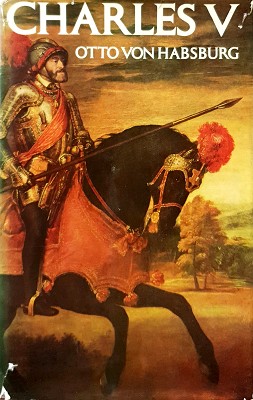
Otto von Habsburg, Charles V, trans. Michael Ross (London: Weidenfeld and Nicolson, 1970)

31347027086

Born on the eve of the cultural and political upheaval of the sixteenth century, Charles V inherited a vast and wide-reigning authority as King of Spain and Holy Roman Emperor that few men in history have ever rivaled. Dr. Otto von Habsburg, a descendant of Charles and heir of the last Habsburg emperor, prefaces his renowned ancestor’s 1967 biography by stating “later centuries were incapable of grasping Charles V’s conception of the world.” Nevertheless, Habsburg argues that challenges facing Europe in the present day are similar enough to the cultural revolution of the sixteenth century that “Charles V, once regarded as the last fighter in a rearguard action, is suddenly seen to have a been a forerunner.” Throughout the book he explores the relevance of the deeply Catholic and chivalric vision of Christendom that motivated Charles’ reign. It might seem easy to accuse the author of a favorable bias towards his subject, an accusation from which the book is not entirely immune. However, such an accusation ignores the real awareness of Charles’s vision that Habsburg gains from his concrete understanding of his own familial tradition. Otto von Habsburg’s Charles V offers a brilliant insight into the world and worldview of the history-shaping emperor, yet its lack of primary source citations and heavy reliance on secondary sources render it more of an introduction to its subject, and not, as seems to have been intended, an analytic biography.

Continue reading →

Looking to the West: A Brief Study of Tolkien’s Carolingian Heritage

28 Thursday Sep 2023

Posted by Matthew Scarince in Christendom

≈ Leave a comment

Tags

Carolingian Empire, Charlemagne, christendom, Holy Roman Empire, J.R.R. Tolkien, The Lord of the Rings, The West

Halls of Manwe - J.R.R. Tolkien

Upreared from sea to cloud then sheer
a shoreless mountain stood;
its sides were black from the sullen tide
up to its smoking hood, 
but its spire was lit with a living fire
that ever rose and fell:
tall as a column in High Heaven’s hall,
its roots were deep as Hell;
grounded in chasms the waters drowned
and swallowed long ago
it stands, I guess, on the foundered land
where the kings of kings lie low

-J. R.R. Tolkien, Imram (The Death of St. Brendan) 

Each of the subcreative works of J.R.R. Tolkien displays a careful and thoughtful attention to the cultures and civilizations which populate his secondary reality. He drew deep and rich realities from the history of the Primary World and studying his invented histories can illuminate both philosophical and macro-historical themes with which Tolkien engaged. In particular, investigating Tolkien’s use of the West as a civilizational concept in his novel The Lord of the Rings, written between 1937 and 1954, reveals his appropriation of the Carolingian heritage of Europe, which transformed the work from what was originally intended as a “mythology for England” into what Bradley Birzer calls “a myth for the restoration of Christendom itself.” This appropriation was controversial, especially during the Second World War when the National Socialists in Germany attempted to usurp this European heritage for themselves. A close reading of The Lord of the Rings reveals the parallels between Tolkien’s restored Kingdom of the West and the Carolingian Holy Empire, the West as a source of spiritual renewal, and Tolkien’s defense of Western mythology against the Nazi usurpation of the European tradition.

Continue reading →

The Peace Emperor, 100 Years Later

22 Saturday Oct 2022

Posted by Matthew Scarince in Christendom

≈ 2 Comments

Tags

Austria, Bl. Karl of Austria, christendom, Civilization

TheLastPaintingoftheEmperor

It’s almost hard to believe that only a hundred years have passed since the death of the last Austro-Hungarian Emperor on the Portuguese island of Madeira. To simply list the changes to the world that have taken place since then would be inadequate, failing to capture the magnitude and depth of “the long twentieth century,” its joys and its horrors. For those who view recent events in a historical frame of mind, a mere century is a trifle to be added to the long ages of human existence, but in the real experience of a people, that time has already faded from living memory. So it is incredible that a man who died in obscurity on the periphery of a dying civilization finds such admiration in our troubled time.

Continue reading →

Preface to Abendland (Abendland Vol 1. October 1st, 1925)

25 Wednesday Aug 2021

Posted by Matthew Scarince in Christendom

≈ 1 Comment

Tags

Abendland Movement, Austria, christendom, Germany, Hermann Platz, Holy Roman Emperor, Supernationalism, United Europe, Western Civilization, Western Culture

HermannPlatz

AbendlandPlatz1

By Hermann Platz

Translated by M.T. Scarince

As natural as service to the fatherland is for us – only fanatics believe that they have to be suspicious of it and instruct us in it – just as natural, after we have given each country its part, is the service to the greater country that we will hereafter call the West (Abendland). Admittedly, the consciousness of our occidental solidarity has been widely lost even here on the Rhine, where almost everything ought to keep it present to us. But today is a time of crisis, a time of divorce and decision, a day of judgment and a turning point, where individuals, peoples and groups of peoples must move on towards their new horizons and tasks- or perish. It must shake us up and lead us forward! Only once, perhaps, this moment of grace, this view into the distance, this duty of reconsideration has come close to us and to the many who are looking to us for inspiration. 

Continue reading →

Legitimacy and Legality Part III: A Brief Outline of the System 5.-9.

18 Wednesday Aug 2021

Posted by Matthew Scarince in Christendom

≈ 3 Comments

Tags

Authority, christendom, Hans Karl von Zessner-Spitzenberg, Legality, Legitimacy, Politics, Power, Reparation, Restoration, Usurpation

Zessner_SpitzenbergLegitimitat

By Dr. Hans Karl von Zeßner-Spitzenberg

Translated by M. T. Scarince

Translator’s note: This is the third part in a series of posts translating the work of Austrian Legitimist philosopher Hans Karl Freiherr von Zeßner-Spitzenberg (1885-1938), an active member of the Kaiser-Karl-Gebetsliga and a martyr for the cause of Austrian independence from the National Socialist occupation. Read Part I, Part II, Part IV.

5. Legality 

Legal refers to a state power which actually exists as a state power, as legislation and guardian of the law, which operates as such and as such has de facto asserted itself in public life. It fulfills the basic moral purpose of the state, the maintenance of public order, and thus the care of the Common Good by means of the basic element of the state’s power of order (i.e. by means of the positive legal regulation of social relations); namely, when it keeps itself bound to the positive legal order given and represented by it, when it sets the predetermined legal ways and measures in place of arbitrary acts of violence. These two moments, the actual establishment of order and one’s own commitment to it, are what make a force legal state power, in contrast to arbitrary and violent rule on the one hand and to revolutionary, adventurist, street-thug or tyrant rule on the other, which do not guarantee the moral original purpose of state power: public order and the Common Good through positive statutes. 

Continue reading →

Legitimacy and Legality Part I: The Introduction

17 Tuesday Aug 2021

Posted by Matthew Scarince in Christendom

≈ 3 Comments

Tags

Austria, christendom, Hans Karl von Zessner-Spitzenberg, House of Habsburg, Legitimacy, Legitimism

Zessner_Spitzenberg

By Dr. Hans Karl von Zeßner-Spitzenberg

Translated by M. T. Scarince

Translator’s note: This is the first part in a series of posts translating the work of Austrian Legitimist philosopher Hans Karl Freiherr von Zeßner-Spitzenberg (1885-1938), an active member of the Kaiser-Karl-Gebetsliga and a martyr for the cause of Austrian independence from the National Socialist occupation. Read Part II, Part III, Part IV.

True Power lies in Justice

-Klemens Metternich

The law of hereditary succession of European rulers according to the indisputable Rule of Primogeniture is the first amongst all conceived earthly guarantees of any success at all, the foundation of the Legitimacy of all the rest of just relations, thus of national fortune: its violation in a single State is a universal calamity for all co-existing States.

-Adam Heinrich Müller

Condemned: The injustice of an act when successful inflicts no injury on the sanctity of right. It is lawful to refuse obedience to legitimate princes, and even to rebel against them.

-Theses 61 and 63 of the Syllabus of Pius IX

 According to the Catholic social conception, the nature of sovereignty appears most clearly when it is familial, that is to say, when the family is its bearer and the family stands as the sponsor of the body politic. As in the family other rights will be imparted through hereditary inheritance from generation to generation, so in this case also sovereignty. That family, which bears the spirit of the State, or who— as was the case especially in Austria— even created it, gain the hereditary right to preserve it. Nowhere does this appear more obviously than in the development and continuation of the multi-national monarchy of the House of Austria. Continue reading →

Europe Awake! A Brief Biography of Richard von Coudenhove-Kalergi

07 Monday Jun 2021

Posted by Matthew Scarince in Christendom

≈ 1 Comment

Tags

Abendland Movement, Charlemagne, christendom, European Union, Holy Roman Empire, Otto von Habsburg, paneuropa, Richard von Coudenhove-Kalergi

The inner meaning of freedom is not freedom to produce anarchy or chaos, but freedom to develop according to form. Where there is freedom it is not arbitrariness which prevails, but inner law… Whoever confuses freedom and arbitrariness soon loses freedom, which he neither deserves nor can carry.

-Richard von Coudenhove-Kalergi, The Totalitarian State Against Man.

Richard Nikolaus Eijiro, Graf von Coudenhove-Kalergi, one of the most influential and mischaracterized founders of the Pan-European Movement, was born in Tokyo in 1894, the first son of the Austrian-Hungarian Ambassador Heinrich von Coudenhove-Kalergi and Mitsuko Maria Aoyama, a Japanese convert to Catholicism. The Coudenhove family were Flemish nobles who inherited the patrimony of the Greco-Venetian Kallegris, and Aoyama was the daughter of a moderately wealthy Japanese commoner. Richard was raised in Ronsperg, in the Austrian Crownland of Bohemia, the second eldest of seven children, and was destined to follow his father into the diplomatic service. Though exempt from service due to his studies at the Theresianum, his first hand experience of the horrors of the first “European Civil War,” and the growing menace of Soviet Russia convinced him of the necessity of Pan-European federal state, one capable of standing militarily and economically against Bolshevism. Continue reading →

The Peace-Emperor: A Personal Reflection

21 Wednesday Oct 2020

Posted by Matthew Scarince in Christendom

≈ 3 Comments

Tags

Bl. Karl of Austria, Blessed Karl of Austria, Blessed Sacrament, Blessed Virgin Mary, christendom, Holy Eucharist, Politics

As the world sees these things, the emperor’s brief life was a tragedy; his empress’ long wait an exercise in illusion. But the truth is that, devoted to their Faith, their peoples, their children, and each other, they saw far more clearly than those whom fortune or Providence gave more power to – more than Wilson, the kaiser’s generals, Clemenceau, or Lloyd George. The pettiness of the Czernins, the Renners, and the Horthys that line their path merely serve, a century on, to underline their true greatness.

-Charles Coulombe, Blessed Charles of Austria: A Holy Emperor and His Legacy

Praying last night in the Church of Santa Maria dell’Anima, I felt enveloped in a deep serenity. Time, the fleeting world, passed into the obscurity of earthly twilight: the Eucharistic Sun alone remained shining forth His rays to comfort this deeply afflicted world. In this year of crisis, it is easy to fall prey to doubt, to let ” the care of this world and the deceitfulness of riches choketh up the Word” in our lives. In these moments, the saints show us the path of virtue, guide us to the light of the Sun of Justice. And there in the presence of Our Lady of the Soul, my own soul saw for the first time that the anxiety and turmoil we now face is as nothing to the Eternal Peace which one courageous saint tried to make present in a small way on earth a little over a century ago.

Continue reading →

← Older posts

S. Mauritius

Categories

  • Christendom
  • HRM Archive
  • Random Days
  • The World of THE WAR FOR CHRISTENDOM
  • Tower of Ivory

Archives

  • Matthew Scarince's avatar
  • The Imperial Traditionalist's avatar

Copryright Notice:

Written Content of this site (unless otherwise attributed) ©2015-2024 Center for Legitimist Documentation

Create a website or blog at WordPress.com

  • Subscribe Subscribed
    • The War for Christendom
    • Join 92 other subscribers
    • Already have a WordPress.com account? Log in now.
    • The War for Christendom
    • Subscribe Subscribed
    • Sign up
    • Log in
    • Report this content
    • View site in Reader
    • Manage subscriptions
    • Collapse this bar
 

Loading Comments...