• Home
  • About
  • Contact Us
  • The World of THE WAR FOR CHRISTENDOM
  • On the Current Crisis
  • A Return to a Sane World: Legitimist Manifesto
  • Related Links

The War for Christendom

~ Center for Legitimist Documentation

The War for Christendom

Tag Archives: Sacred Ages

The Pillars of Good Authority

16 Monday Mar 2026

Posted by Matthew Scarince in Christendom

≈ 1 Comment

Tags

Canon Law, christianity, Civilization, Justice, Legality, Legitimacy, Politics, religion, Rufinus, Sacred Ages

Abuse of power is permitted by God and therefore the power is said to be “from God;” not, however, because God permits sin, for this would mean that the sin would be from God. Indeed, evil power is understood to exist by the permission of God because, since God is the author of the authority itself, which should not be thought of as a sin; He is not the approver of its abuse: And since this discussion is specifically about secular authority, it should be known that there are two things which, like two pillars, support good authority and without which no authority is approved: namely, legitimate institution and the moderation of justice. And indeed, legitimate institution revolves around three things: namely, the institutor, the one instituted, and those over whom he is instituted. Regarding the one who institutes, that he have public authority to institute, such as an emperor, a prefect, and the like; regarding the one instituted: that the person be suitable to be adorned with the cingulum [sword-belt, a Roman symbol of authority] of secular power, for example, not a regular cleric but a zealous layman; regarding those over whom it is established: that secular power rule over laymen, not to be placed over the hierarchy of clerics. The moderation of justice, however, is determined by five articles: according to the person, according to the cause, according to the measure, according to the place, and according to the time. According to the person, something is or is not permitted to the secular power: for example, it is permitted to lay hands on a layman if he sins, but not on a cleric. Justice is regulated according to the cause, so that secular, not spiritual, matters are examined by earthly authority. It is regulated according to measure or mode: when every offense is punished with a penalty that is fitting and appropriate to it, so that neither private hatred adds to a sufficient penalty nor private affection diminishes the proper severity. Justice is determined according to place, that is, where it is fitting for judgment to be exercised and honor shown to venerable places: so that in a church no one accused is punished, nor is a fugitive dragged from it to be handed over to corporal punishment. According to the timing: that reverence be shown on sacred and solemn days, so that even those who deserve punishment for their sins may be spared on these days.

-Rufinus the Decretist, Summa Decretorum (c. A.D. 1159)

Reflections on Nobility, the People, and Vocation

12 Friday May 2017

Posted by Matthew Scarince in Christendom

≈ 13 Comments

Tags

Authority, Chivalry, christendom, Civilization, Courage, Honor, Nobility, Sacred Ages, Virtue, Vocation

One nobility belongs to all the faithful, one dignity, one splendour of race, since all are born of the same Spirit and of the same sacrament of faith, and are sons of God and coheirs of the same inheritance; the rich and the powerful have no other Christ besides Him Who is followed by the poor; they are initiated in no other sacraments, and have no higher expectation of the Celestial Kingdom; all are brethren and members of the Body of Christ, of His flesh and of His bones.

The Catechism of Trent, as quoted by Kenelm Henry Digby in The Broad-Stone of Honour

The true Catholic principle regarding the life of man, is of course Vocation; the fulfillment of the unique purpose and mission in accordance with God’s will. It is intrinsically bound up with the final end of Man, the call to holiness and virtue. It is this principle which must be the foundation of any Catholic Nobility. However, since it is true that not only does all of Mankind share in an inherent nobility (disgraced but not debased by the Fall), but also that all of the Faithful share in a Nobility of Royal Priesthood, wherein does the concept of a separate hierarchical Nobility find its justification?

Continue reading →

Reflections on Imperium

08 Saturday Apr 2017

Posted by Matthew Scarince in Christendom

≈ 2 Comments

Tags

Authority, Charlemagne, Holy Roman Empire, Imperium, Karl of Austria, Otto Von Hapsburg, Power, Sacred Ages

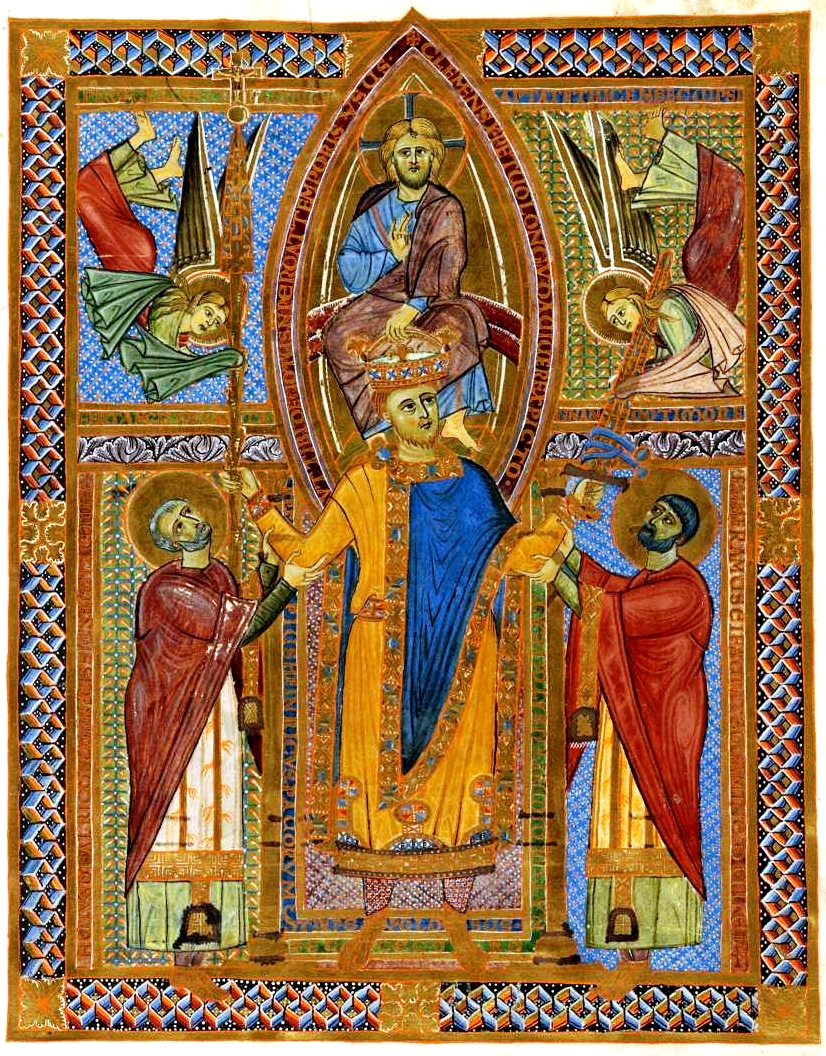
Kronung_Heinrich_II

The Imperial Dignity is not in the spoken name itself, but consists and culminates in glorious piety.

-Emperor Louis II, Letter to Basil King of Greece

What is the nature of the Imperium? The Imperium, the Authority to command and administer justice universally, is not mere power, as is so often assumed by those of a certain political conviction. It is a truly unique among temporal authorities in the sense that only one living man may receive it, yet also in that it is essentially non-territorial. The Imperator is the firstborn (in the temporal order) of the Diákonοί kai Leitourgοί Theoú, the Servants and Ministeriales of God. Continue reading →

Civilization, the Continual Vigilance

12 Sunday Mar 2017

Posted by Matthew Scarince in Christendom

≈ 2 Comments

Tags

Age of Faith, Barbarianism, Catholic Civilization, Charlemagne, christendom, Holy Roman Empire, Restoration, Sacred Ages, The Story of Civilization

Out of this intimate co-operation of Church and state came one of the most brilliant ideas in the history of statesmanship: the transformation of Charlemagne’s realm into a Holy Roman Empire that should have behind it all the prestige, sanctity, and stability of both Imperial and Papal Rome… If the bold scheme could be carried through there would again be a Roman emperor in the West, Latin Christianity would stand strong and unified against schismatic Byzantium and threatening Saracens, and by the awe and magic of the imperial name, barbarized Europe might reach back across centuries of darkness, and inherit and Christianize the civilization and culture of the ancient world… the Holy Roman Empire was a noble conception, a dream of security and peace, order and civilization restored in a world heroically won from barbarism, violence, and ignorance. 

-Will Durant, The Story of Civilization: The Age of Faith

Europe is the Empire: The Social Order of Tomorrow

02 Thursday Feb 2017

Posted by Matthew Scarince in Christendom

≈ 3 Comments

Tags

Charlemagne, christendom, Democracy, Europe is the Empire, European Union, Holy Roman Empire, Judicial Primacy, Legitimacy, Monarchy, Otto Von Hapsburg, Sacred Ages, The Social Order of Tomorrow

vasari coronation charles v bologna detail

The West is Europe and Europe is the Empire; Europe is the Empire Revisited; Europe is the Empire: Benedict Edition

The Social Order of Tomorrow by the his late majesty Otto of Austria is book which every true Rightist should read. His vision of the repersonalization of economics brought about by the coming “Atomic Age” has not come to pass, however all of the underlying societal, economic, and especially political principles (with one exception that will be discussed later) remain as true today as they were eight hundred years before the book was written. In examining the political aspect, let us begin where his Majesty began, with this very important principle;

We are not the playthings of blind forces, but free men who, in accordance with the will of God, are able to shape their own lives.

Continue reading →

Blessed Carolus, Holy Roman Emperor

28 Saturday Jan 2017

Posted by Matthew Scarince in Christendom

≈ 3 Comments

Tags

Carolus Magnus, Charlemagne, christendom, Civilization, Father of Europe, History, Holy Roman Empire, Imperial History, Politics, Sacred Ages, Sacretemporal

thaya_pfarrkirche_-_fenster_1a_karl_der_grose

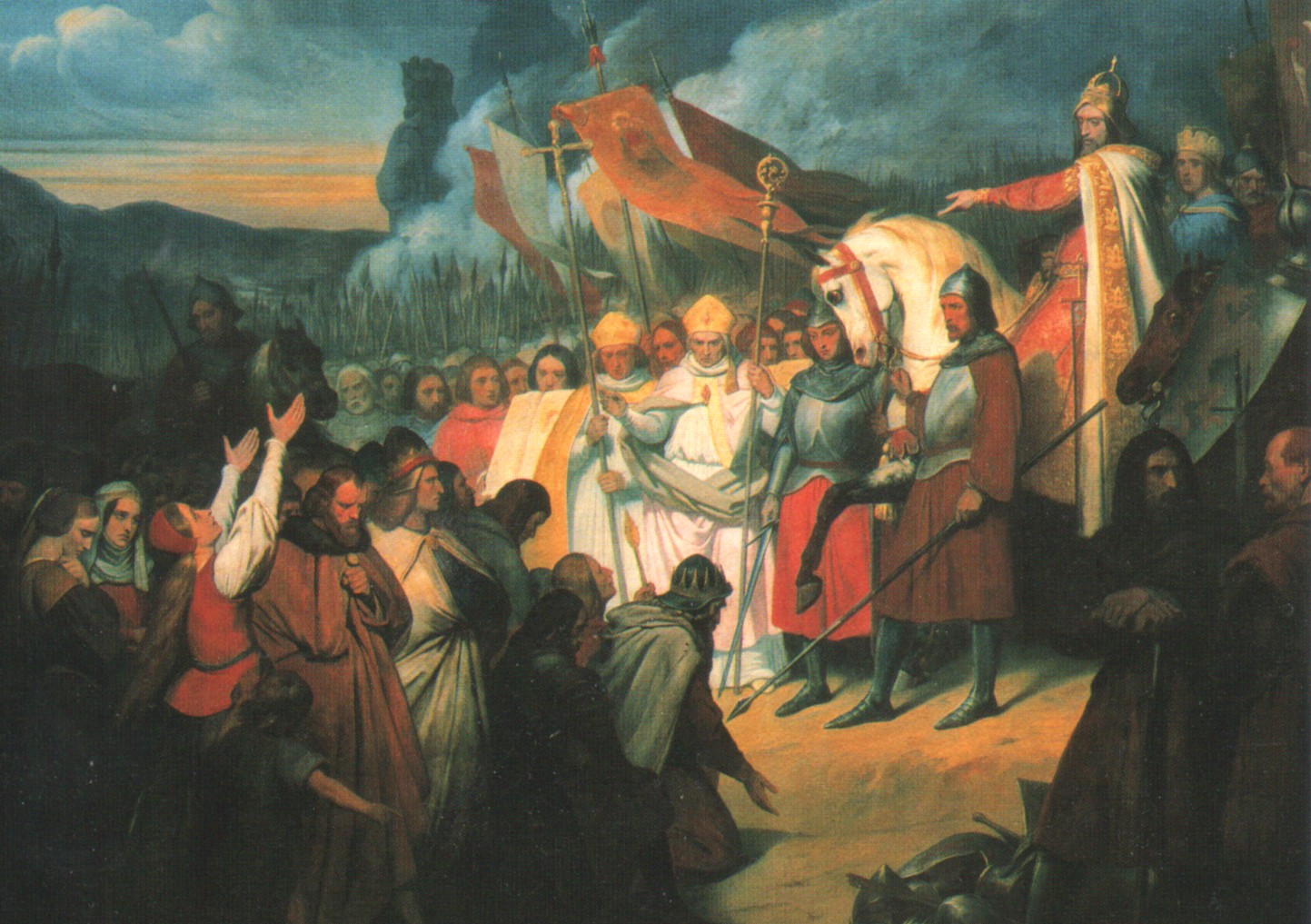
On the most Holy Day of the Nativity of the Lord when the King rose from praying at Mass before the tomb of biased Peter the Apostle, Pope Leo placed a crown on his head and all the Roman people cried out, “To Carolus, pious Augustus, crowned by God, great and peace giving Emperor of the Romans, life and victory.” And after the laudation he was honoured by the pope in the manner of the ancient princes and, the title of Patrician being set aside, he was called Emperor and Augustus.

Of all the rulers of the Holy Roman Empire the most renowned, the first to receive the golden Imperial Crown from the hands of the Roman Pontiff, no Emperor has so captured the Catholic imagination as Carolus Magnus, the Emperor Charlemagne. The beginning of the Sacred Ages might truly be dated to his coronation on the feast of the Nativity of Our Lord. Born on the second of April in the year of Our Lord 742 in the realm of Austrasia, Karol (as he was named in old Frankish) was the oldest son of Pippin the Short, King of Francia and Patrician of the Roman Empire. Upon the death of King Pippin in A.D. 768, Karol and his younger brother Karloman jointly ascended to the Frankish throne, in the midst of a rebellion in Aquitania.

Continue reading →

Was there ever a “Medieval Nationalism”?

11 Wednesday Jan 2017

Posted by Matthew Scarince in Christendom

≈ 8 Comments

Tags

Albigensians, christendom, Holy Roman Emperor Sigismund, Holy Roman Empire, Kingdom of France, Nationalism, Sacred Ages, Taborites

taborites_in_the_hussite_wars

The first truly concrete, “systematized” identitarian revolution in Europe is Taboritism, the radical form of Hussitism… This furious explosion of a synthetic mixture of nationalism, socialism, and radical democracy with communist innuendos not only had devastated large parts of Bohemia, Moravia, and Upper Hungary, but also had deeply shaken the social and spiritual fabric of Europe. In their perennial ramifications the shadows of this profound revolution are still with us and will continue to be for some time.

-Erik von Kuehnelt-Leddihn, Leftism

Recently I came across an article attempting to claim that Nationalism was not only a political-philosophy that originated in the “Medieval Period,” but that it was the political norm. Referring to the Holy Roman Empire with the absurd (never officially recognized) addition “of the German Nation“ the article goes on to claim that the Crownlands of Empire in the Sacred Ages “included all people of the German nationality,” a falsehood which completely ignores not only the Transylvanian Saxons, but also the Danube Swabians, the Carpathian Germans (Zipsers), the Walddeutsche, the Teutonic Livonians, the Saxons of Schleswig, and the Vosges Germans. Still the questions remain, was there a form of Nationalism present in the Sacred Ages, and was it the prevalent understanding of the political order?

Continue reading →

The Vision of Roland

10 Thursday Nov 2016

Posted by Matthew Scarince in Christendom

≈ 4 Comments

Tags

Charlemagne, christendom, Holy Roman Empire, Roland, Sacred Ages, the Song of Roland

last_stand_of_roland

Far, far across the hills echoed the song of the Olifant of the Palatines. In the vanguard of his army Carolus Goldencrowned heard it beyond the Pass of Runcievalles, summoning the riders of the King of the West. Now swiftly they rode, their own horns giving answer, swiftly to brandish bright swords against the enemies of the free realms. Alas! too late had come the summons and what aid now could save those valiant knights of Christendom?

Continue reading →

A Verse in Old Saxon

27 Thursday Oct 2016

Posted by Matthew Scarince in Christendom, The World of THE WAR FOR CHRISTENDOM

≈ Leave a comment

Tags

Dhe Krig fon Athalstenos, John of Oxenford, Sacred Ages, the Sea Kings

thewesterlyhope

Mīmarōn af mäner ðē hōponing wāri in ðē westra ligið enði fana ðē sēo kumið

 (“Remember, of men the true hope in the west lieth and from the sea cometh.”)

–Johannes fon Oschenforð’s Ðē Krīg af Athalstēnos (as found in an undated paraphrase of a manuscript commentary on the work and thence reconstructed)

“Stand, Men of the West!”

09 Thursday Jun 2016

Posted by Matthew Scarince in Christendom

≈ 3 Comments

Tags

christendom, Europe, J.R.R. Tolkien, Middle Ages, Sacred Ages, The Lord of the Rings

jay-johnstone-7

Image Courtesy of Jay Johnstone

I bow not yet before the Iron Crown,
nor cast my own small golden sceptre down

The Lord of the Rings, and indeed the whole Lengendarium of John Ronald Reuel Tolkien is among the greatest influences on my overall worldview. This “story… cast in terms of a good side, and a bad side, beauty against ruthless ugliness, tyranny against kingship, moderated freedom with consent against compulsion that has long lost any object save mere power…” seems to have an almost universal appeal, it touches something deep in the soul of mankind, that there is Good, and yet there is Evil,  dark, powerful, and yet beyond all hope Good triumphs. However, for myself the enchantment of these myths and fictional histories is their deep connection with the increasingly forgotten histories and legends of my own Western Civilization.

Continue reading →

← Older posts

S. Mauritius

Categories

  • Christendom
  • HRM Archive
  • Random Days
  • The World of THE WAR FOR CHRISTENDOM
  • Tower of Ivory

Archives

  • Matthew Scarince's avatar
  • The Imperial Traditionalist's avatar

Copryright Notice:

Written Content of this site (unless otherwise attributed) ©2015-2026 Center for Legitimist Documentation

Create a website or blog at WordPress.com

  • Subscribe Subscribed
    • The War for Christendom
    • Join 92 other subscribers
    • Already have a WordPress.com account? Log in now.
    • The War for Christendom
    • Subscribe Subscribed
    • Sign up
    • Log in
    • Report this content
    • View site in Reader
    • Manage subscriptions
    • Collapse this bar
 

Loading Comments...