Tags
christendom, Church and State, History, Holy Roman Empire, Innocent III, Pope, Prince-Electors, Sacred Ages
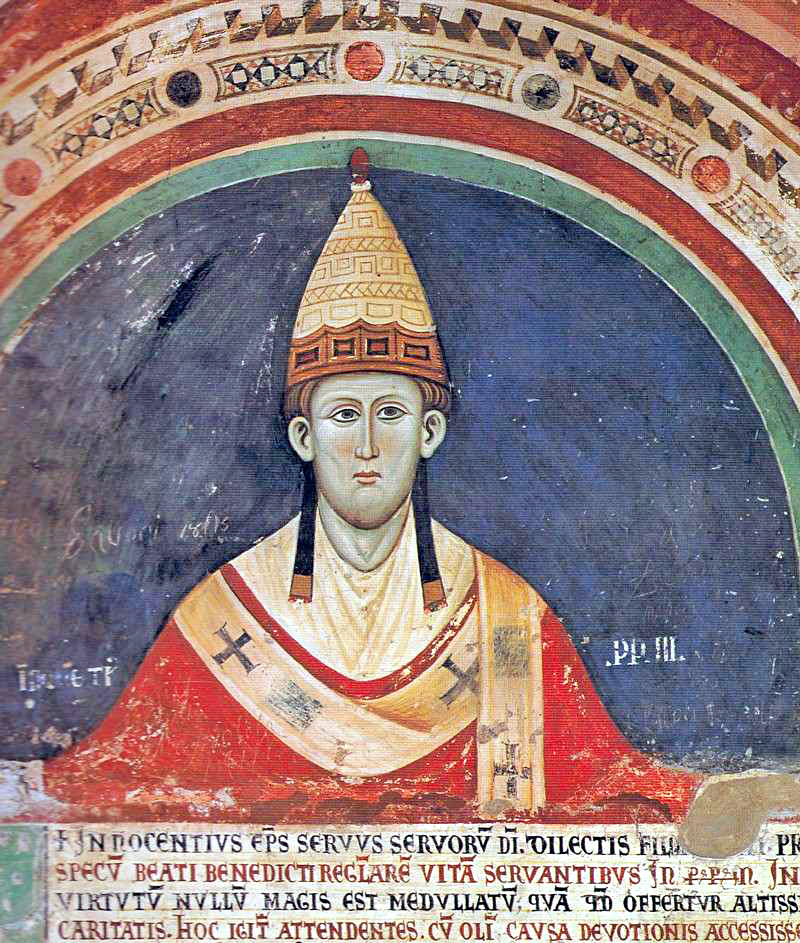
Truly we owe justice to every person because of our obligation to exercise our apostolic office. Just as we do not want our justice to be usurped by others, we do not wish to take away the right of the princes.
We acknowledge as we are bound, that the right and authority to elect a king (later to be elevated to the Imperial throne) belongs to those princes to whom it is known to belong by right and ancient custom; especially as this right and authority came to them from the Apostolic See, which transferred the Empire from the Greeks to the Germans in the person of Charles the Great. But the princes should recognize, and assuredly do recognize, that the right and authority to examine the person so elected king (to be elevated to the Empire) belongs to us who anoint, consecrate and crown him.– Innocent III, Venerabilem
 After the death of Conradin, the grandson of the heretic Frederick II, the Empire was thrown into a lawless chaos now called the Interregnum. Men forsook the laws that had governed them and turned to robbery and violence, especially in the region of Southern Swabia (now Switzerland) near the High Rhine and the Aar. Below follows a proximate translation of the history of Count Rudolf IV von Hapsburg, taken from the Chronicon Helveticum (which in turn was taken from earlier sources such as the Chronik der Königsfelden ):


 The War for Christendom