• Home
  • About
  • Contact Us
  • The World of THE WAR FOR CHRISTENDOM
  • On the Current Crisis
  • A Return to a Sane World: Legitimist Manifesto
  • Related Links

The War for Christendom

~ Center for Legitimist Documentation

The War for Christendom

Category Archives: Christendom

The Emperor is Dead! Long Live the Emperor!

21 Monday Nov 2016

Posted by Matthew Scarince in Christendom

≈ Leave a comment

Tags

Austria, christendom, Emperor Franz Josef I, Holy Roman Empire, Imperial History, The Great War

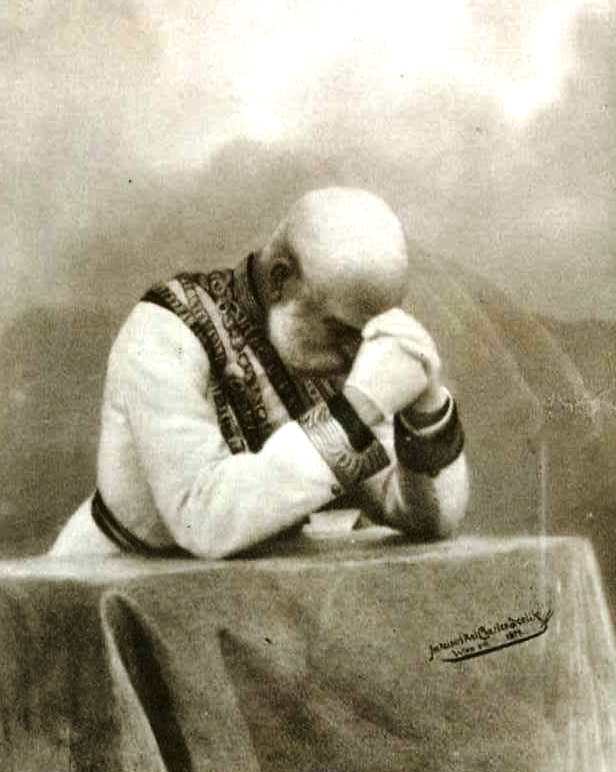
franz-josef-in-prayerOn this day (November 21) one hundred years ago (in 1916), His Majesty Franz Josef, Emperor of Austria, King of Bohemia, Apostolic King of Hungary, King of Jerusalem (etc.), and heir of the Holy Roman Emperors, entered Eternal Life after a reign of sixty-eight years. He came to the throne amidst the fires of revolution, and died amidst the ashes of the Great War, and yet for the long years of his reign, his peoples were at peace and contented. So long as he ruled it, this last remnant of Christendom in Europe seemed as though it would last into the far distant future. And yet his own life was fraught with tragedy that might have brought lesser men to despair, the murder of his brother, of his only son, of his wife, and finally of his heir, and through it all he held firm to his God-given duties to his peoples.

However, the death of the old Emperor was not only a time of mourning, for it was also on this day that Archduke Karl ascended to the throne of the war-torn Empire; Emperor as was foretold by St. Pius X, and though most of his reign would be spent in exile, he was certainly a worthy successor of his great-uncle Franz Josef, blessed with same courage and devotion.

Pie Jesu Domine,
Dona eis requiem sempiternam

1000px-coat_of_arms_of_emperor_franz_joseph_i-svg

Is “Hapsburg” an Incorrect Spelling?

17 Thursday Nov 2016

Posted by Matthew Scarince in Christendom, HRM Archive

≈ 7 Comments

Tags

Archduke Eduard, Count Raedbot of Klettgau, Etymology, Habsburg, Habspurg, Hapsburg, House of Austria, Imperial History, Philology

habspurg-wappen_zwbHis Imperial Highness Archduke Eduard of Austria recently published an excellent article in the Catholic Herald, speaking of the recent Papal Audience with House of Austria, and including in this article a rather curious postscript;

I’d like to take this opportunity to reach out to our English-speaking friends and ask them always to write Habsburg with a “b”. The “Hapsburg” variant has been around since the 17th century, but that doesn’t make it the correct spelling. Thanks.

Now I intend no disrespect to the Archduke, but having made a thorough study of the etymology and orthography of the name of his most Noble House, I have found that the variant spelling is not only a correct spelling, but it in fact predates the Neuhochdeutsch “Habsburg” variant. This is not to say that the Imperial and Royal family ought not use the spelling “Habsburg,” but rather I intend to show through the orthographic history of the name that the spelling “Hapsburg” is in fact a correct and usable variation.

Continue reading →

The Vision of Roland

10 Thursday Nov 2016

Posted by Matthew Scarince in Christendom

≈ 4 Comments

Tags

Charlemagne, christendom, Holy Roman Empire, Roland, Sacred Ages, the Song of Roland

last_stand_of_roland

Far, far across the hills echoed the song of the Olifant of the Palatines. In the vanguard of his army Carolus Goldencrowned heard it beyond the Pass of Runcievalles, summoning the riders of the King of the West. Now swiftly they rode, their own horns giving answer, swiftly to brandish bright swords against the enemies of the free realms. Alas! too late had come the summons and what aid now could save those valiant knights of Christendom?

Continue reading →

Pope Praises Blessed Karl of Austria

06 Sunday Nov 2016

Posted by Matthew Scarince in Christendom, HRM Archive

≈ Leave a comment

Tags

Blessed Karl of Austria, House of Austria, Pope Francis, Reichsidee

blkaiserkarl

In a special audience yesterday (November 5th) with three hundred members of the Imperial House of Austria, including his majesty Karl (the current Head of the Imperial House), on the occasion of the Jubilee Year of Mercy, his Holiness Pope Francis spoke to the family about the last reigning Emperor Blessed Karl of Austria;

In this happy circumstance, you also remember in a special way Blessed Karl of Austria, who precisely one hundred years ago acceded to the throne. His spiritual presence in your midst ensures that the Habsburg family today does not turn to the past in a nostalgic manner but, on the contrary, is actively present in the current moment, with its challenges and its needs. Indeed, some of you hold prominent roles in organisations of solidarity and human and cultural development; as well as in support of the project of Europe as a common home founded on human and Christian values.

Continue reading →

The Humility of the Saints and the Nobility of Man

01 Tuesday Nov 2016

Posted by Matthew Scarince in Christendom

≈ 3 Comments

Tags

G.K. Chesterton, Humility, Mankind, Nobility, St. Bernard, St. Dominic

allegoryofreligion_overbeck

In one way Man was to be haughtier than he had ever been before; in another way he was to be humbler than he had ever been before. In so far as I am Man I am the chief of creatures. In so far as I am a man I am the chief of sinners. All humility that had meant pessimism, that had meant man taking a vague or mean view of his whole destiny—all that was to go. We were to hear no more the wail of Ecclesiastes that humanity had no preeminence over the brute, or the awful cry of Homer that man was only the saddest of all the beasts of the field. Man was a statue of God walking about the garden. Man had preeminence over all the brutes; man was only sad because he was not a beast, but a broken god. The Greek had spoken of men creeping on the earth, as if clinging to it. Now Man was to tread on the earth as if to subdue it. Christianity thus held a thought of the dignity of man that could only be expressed in crowns rayed like the sun and fans of peacock plumage. Yet at the same time it could hold a thought about the abject smallness of man that could only be expressed in fasting and fantastic submission, in the gray ashes of St. Dominic and the white snows of St. Bernard. When one came to think of one’s self, there was vista and void enough for any amount of bleak abnegation and bitter truth. There the realistic gentleman could let himself go—as long as he let himself go at himself. There was an open playground for the happy pessimist. Let him say anything against himself short of blaspheming the original aim of his being; let him call himself a fool and even a damned fool (though that is Calvinistic); but he must not say that fools are not worth saving. He must not say that a man, qua man, can be valueless. Here, again in short, Christianity got over the difficulty of combining furious opposites, by keeping them both, and keeping them both furious. The Church was positive on both points. One can hardly think too little of one’s self. One can hardly think too much of one’s soul.

-G.K. Chesterton, Orthodoxy

A Verse in Old Saxon

27 Thursday Oct 2016

Posted by Matthew Scarince in Christendom, The World of THE WAR FOR CHRISTENDOM

≈ Leave a comment

Tags

Dhe Krig fon Athalstenos, John of Oxenford, Sacred Ages, the Sea Kings

thewesterlyhope

Mīmarōn af mäner ðē hōponing wāri in ðē westra ligið enði fana ðē sēo kumið

 (“Remember, of men the true hope in the west lieth and from the sea cometh.”)

–Johannes fon Oschenforð’s Ðē Krīg af Athalstēnos (as found in an undated paraphrase of a manuscript commentary on the work and thence reconstructed)

On Legitimacy Part I: Preliminaries and the Necessity of Legitimacy

26 Wednesday Oct 2016

Posted by Matthew Scarince in Christendom

≈ 2 Comments

Tags

Authority, Erik von Kuehnelt-Leddihn, Legitimacy, Liberty or Equality, Politics, Power

Hapsburg_Eagle

Since we believe that there are other will-powers in this universe besides that of God, we have a good right to view all actions and activities critically—to reflect, to speculate, to conform or oppose or resist. Thus it is evident that all power being exercised is subject to critical analysis by investigation of its purpose, its effects, the intentions of its exercisers. An exousia—regardless of whether we translate this Scriptural term as “authority ” or “power”—has to have a positive relationship towards its purpose, the common good. To be theoú diákonos, “a servant of God,” it is necessary that a power be “reasonable,” i.e., ordained towards its natural end.* A ruler in the possession of power, but misusing it by woefully harming the common good, is not a “helpmate of God” (leitourgós theoú) and thus has no claim to authority and to obedience. It can even be argued that power, well established and entrenched, claiming authority but methodically destroying the values of the common good, is diabolic in character. The satanic aspects of such government combining power (a divine attribute) with wickedness and irrationality are usually underscored by a quality of confusion; it rarely opposes the common good on all scores and in every respect, though its positive actions are often means to nefarious ends: for example, even maternity wards, recreational institutions and places of learning established by the state can be designed to build up armies intended for aggressive warfare…

A ruler has the same obligation to the right use of power as the owner of property. Both—power and property—have to be used to foster the common good. Their misuse or abuse should result in confiscation or deposition. But it is also evident that legality (even legality according to international law**) is part and parcel of the common good; and therefore legitimacy, in the political sense, cannot be sneered at. Thus, rebellion against a ” legal ” government (i.e., a government legal in the juridical but not in the moral sense) can be excused only if its continued trespasses against other more important aspects of the common good justify steps which according to the secular (constitutional) law are illegal, but become, under these circumstances, legal according to the natural law.

We have hinted that power acting according to reason, that is, intelligently and virtuously, ordaining its efforts towards the common good and not offending against it through its mere existence (as, for example, an unwarranted military occupation by a foreign power), has authority as a genuine leitourgós theoú, a helpmate of God. It certainly is not diabolic. And this situation is, we think, independent of majority consent. If a vast majority of the citizenry is opposed to good or just government, we do not see why this should obviate authority in the least.

-Erik von Kuehnelt-Leddihn, Liberty or Equality

Editor’s Notes:
*”Now the rule and measure of human acts is the reason, which is the first principle of human acts”- St. Thomas Aquinas, Summa Theologica (II)(I) 4. Treatise on Law

**Ius Gentium, see On the Current Crisis for the proper relation between the Ius Gentium and the State.
Blessed Karl , the Hope of Austria

21 Friday Oct 2016

Posted by Matthew Scarince in Christendom

≈ 13 Comments

Tags

Austria-Hungary, Blessed Karl of Austria, christendom, Holy Roman Empire, Hope, House of Hapsburg, Prophecy

karloath

I bless Archduke Charles, who will be the future Emperor of Austria and will help lead his countries and peoples to great honor and many blessings — but this will not become obvious until after his death.

-St. Pius X, Audience with Empress (then Princess) Zita of Bourbon-Parma

“In exile far from the lands, you sojourn, Hope of Austria…” These words, written for His Imperial and Royal Majesty Otto while he was still an exile in Spain, might very well apply to his father the last reigning Emperor-King, Karl of Austria. His body still sojourns on the isle of Madeira, the final shores of his exile. It might seem strange to connect Hope with his long suffering, his earthly failure as the powers in the world dethroned him, his young death after an excruciating illness. And yet his suffering was not in vain, rather, it was the beginning of something greater, something we now may not see the end of in our earthly lives.

Continue reading →

The Rescuer

20 Thursday Oct 2016

Posted by Matthew Scarince in Christendom

≈ 3 Comments

Tags

Bl. Karl of Austria, christendom, Emperor Karl League of Prayers, House of Hapsburg

avstro-ogrska_telefonska_patrulja_ob_jezeru_pod_tirolskimi_dolomiti

A few days ago at the official website for The Emperor Karl League of Prayer, I came across something I’d like to share with you, my readers, as we approach the feast day of Blessed Emperor Karl. As you probably all know by now, the saintly Emperor has been a huge influence in my life, and I have been praying annually for his canonization. So it is with great pleasure that I present to you a brilliant recounting of an important day for the Imperial-Royal soldiers on the Italian Front, written by author Christopher Reibold. The story itself is based on a true event in Blessed Karl’s life, attested to in the biographies prepared for his beatification. So please enjoy it over there at the League of Prayer website:

The Rescuer

Novena for the Canonization of Bl. Karl of Austria

13 Thursday Oct 2016

Posted by Matthew Scarince in Christendom, HRM Archive

≈ 5 Comments

Tags

Bl. Karl of Austria, Canonization, Holy Roman Empire, Karl of Austria, Novena of Canonization

kaiser_karl_i__seliger

Prayer for the Canonization of Blessed Emperor Karl of Austria:

[To be prayed at the beginning of each day of the novena.]

Heavenly Father, through Blessed Emperor Karl You have given Your Church and the people of God an example of how we can live a discerning and spiritual life in a convincing and courageous way.

His public actions as emperor and king, and his personal acts as a family man, were firmly based in the teachings of the Catholic Faith. His love for his Eucharistic Lord grew in times of trial, and helped him to unite himself to Christ’s sacrifice through his own life’s sacrifice for his peoples. Emperor Karl honored the Mother of God, and loved to pray the rosary throughout his life.

Strengthen us by his intercession when discouragement, faintheartedness, loneliness, bitterness and depression trouble us. Let us follow the example of Your faithful servant, and unselfishly serve our brothers and sisters according to Your will.

Hear my petitions and grant my request [mention your intention here].

Grant that Blessed Karl of Austria be deemed worthy of canonization, for the glory of Your Name, the praise of the Blessed Virgin Mary, and for blessings upon the Church.

Amen.

  • Day One: Reverence for the Most Blessed Sacrament 
  • Day Two: An Emperor Devoted to the Sacred Heart of Jesus 
  • Day Three: A Life of Sacrifice
  • Day Four: Sharing in Christ’s Passion—Greatness in Suffering 
  • Day Five: “Love Your Enemy”
  • Day Six: Devoted Father 
  • Day Seven: The Sovereign
  • Day Eight: Faithful Fulfillment of the Will of God 
  • Day Nine: The Blessed Virgin Mary

Continue reading →

← Older posts
Newer posts →

S. Mauritius

Categories

  • Christendom
  • HRM Archive
  • Random Days
  • The World of THE WAR FOR CHRISTENDOM
  • Tower of Ivory

Archives

  • Matthew Scarince's avatar
  • The Imperial Traditionalist's avatar

Copryright Notice:

Written Content of this site (unless otherwise attributed) ©2015-2026 Center for Legitimist Documentation

Create a website or blog at WordPress.com

  • Subscribe Subscribed
    • The War for Christendom
    • Join 92 other subscribers
    • Already have a WordPress.com account? Log in now.
    • The War for Christendom
    • Subscribe Subscribed
    • Sign up
    • Log in
    • Report this content
    • View site in Reader
    • Manage subscriptions
    • Collapse this bar
 

Loading Comments...