• Home
  • About
  • Contact Us
  • The World of THE WAR FOR CHRISTENDOM
  • On the Current Crisis
  • A Return to a Sane World: Legitimist Manifesto
  • Related Links

The War for Christendom

~ Center for Legitimist Documentation

The War for Christendom

Tag Archives: Politics

Blessed Carolus, Holy Roman Emperor

28 Saturday Jan 2017

Posted by Matthew Scarince in Christendom

≈ 3 Comments

Tags

Carolus Magnus, Charlemagne, christendom, Civilization, Father of Europe, History, Holy Roman Empire, Imperial History, Politics, Sacred Ages, Sacretemporal

thaya_pfarrkirche_-_fenster_1a_karl_der_grose

On the most Holy Day of the Nativity of the Lord when the King rose from praying at Mass before the tomb of biased Peter the Apostle, Pope Leo placed a crown on his head and all the Roman people cried out, “To Carolus, pious Augustus, crowned by God, great and peace giving Emperor of the Romans, life and victory.” And after the laudation he was honoured by the pope in the manner of the ancient princes and, the title of Patrician being set aside, he was called Emperor and Augustus.

Of all the rulers of the Holy Roman Empire the most renowned, the first to receive the golden Imperial Crown from the hands of the Roman Pontiff, no Emperor has so captured the Catholic imagination as Carolus Magnus, the Emperor Charlemagne. The beginning of the Sacred Ages might truly be dated to his coronation on the feast of the Nativity of Our Lord. Born on the second of April in the year of Our Lord 742 in the realm of Austrasia, Karol (as he was named in old Frankish) was the oldest son of Pippin the Short, King of Francia and Patrician of the Roman Empire. Upon the death of King Pippin in A.D. 768, Karol and his younger brother Karloman jointly ascended to the Frankish throne, in the midst of a rebellion in Aquitania.

Continue reading →

On Legitimacy Part I: Preliminaries and the Necessity of Legitimacy

26 Wednesday Oct 2016

Posted by Matthew Scarince in Christendom

≈ 2 Comments

Tags

Authority, Erik von Kuehnelt-Leddihn, Legitimacy, Liberty or Equality, Politics, Power

Hapsburg_Eagle

Since we believe that there are other will-powers in this universe besides that of God, we have a good right to view all actions and activities critically—to reflect, to speculate, to conform or oppose or resist. Thus it is evident that all power being exercised is subject to critical analysis by investigation of its purpose, its effects, the intentions of its exercisers. An exousia—regardless of whether we translate this Scriptural term as “authority ” or “power”—has to have a positive relationship towards its purpose, the common good. To be theoú diákonos, “a servant of God,” it is necessary that a power be “reasonable,” i.e., ordained towards its natural end.* A ruler in the possession of power, but misusing it by woefully harming the common good, is not a “helpmate of God” (leitourgós theoú) and thus has no claim to authority and to obedience. It can even be argued that power, well established and entrenched, claiming authority but methodically destroying the values of the common good, is diabolic in character. The satanic aspects of such government combining power (a divine attribute) with wickedness and irrationality are usually underscored by a quality of confusion; it rarely opposes the common good on all scores and in every respect, though its positive actions are often means to nefarious ends: for example, even maternity wards, recreational institutions and places of learning established by the state can be designed to build up armies intended for aggressive warfare…

A ruler has the same obligation to the right use of power as the owner of property. Both—power and property—have to be used to foster the common good. Their misuse or abuse should result in confiscation or deposition. But it is also evident that legality (even legality according to international law**) is part and parcel of the common good; and therefore legitimacy, in the political sense, cannot be sneered at. Thus, rebellion against a ” legal ” government (i.e., a government legal in the juridical but not in the moral sense) can be excused only if its continued trespasses against other more important aspects of the common good justify steps which according to the secular (constitutional) law are illegal, but become, under these circumstances, legal according to the natural law.

We have hinted that power acting according to reason, that is, intelligently and virtuously, ordaining its efforts towards the common good and not offending against it through its mere existence (as, for example, an unwarranted military occupation by a foreign power), has authority as a genuine leitourgós theoú, a helpmate of God. It certainly is not diabolic. And this situation is, we think, independent of majority consent. If a vast majority of the citizenry is opposed to good or just government, we do not see why this should obviate authority in the least.

-Erik von Kuehnelt-Leddihn, Liberty or Equality

Editor’s Notes:
*”Now the rule and measure of human acts is the reason, which is the first principle of human acts”- St. Thomas Aquinas, Summa Theologica (II)(I) 4. Treatise on Law

**Ius Gentium, see On the Current Crisis for the proper relation between the Ius Gentium and the State.
On the Current Crisis

11 Tuesday Oct 2016

Posted by Matthew Scarince in Christendom

≈ 9 Comments

Tags

"Gens", Civilization, Country, Culture, Holy Empire, Ius Gentium, Mankind, Nation, Politics, Sovereignty, State

Frans_Francken_II_Allegory_of_War

One can readily understand what the dread of passing evils can do, and what great eternal evil follows!

-Pius XII, Exsul Familia Nazarethana

The current crisis to which I refer is not what one would expect, the displacement of peoples, the present wars in which neither side is really “the Right side”. Rather it is the crisis of ideals and definitions, of right and proper relations; not so much what is happening as how it is dealt with- and how it ought to be dealt with. What is at stake is the Right Order of the World, of Human Society, the proper and just relations of beings and of states of being, and the solution is to be found, following the example of the ancients, by looking at the Right Order of the Human Person and Soul to which earthly things are ordered.

Continue reading →

The Racialist Attack Against Christendom

11 Monday Jul 2016

Posted by Matthew Scarince in Christendom

≈ 3 Comments

Tags

Erik von Kuehnelt-Leddihn, Integral Christendom, Politics, race, Racialism, racism

The second attack against integral Christendom, gaining momentum right now, comes from the nonuniversal herdists. They put the human beings into watertight hierarchic categories frequently of a racial nature. This new racial determinism, creating racial aristocracies, responsible to a collective “race” but not to a personal God, and racial proletariats with no hope of an earthly salvation, is not less a danger than the classic panherdism. The desire for racial purity in order to achieve the perfectly uniform herd leads to brutal persecution and finally to the strictest imaginable uniformism… The emphasis on race was so strong, because it is the only factor that cannot be altered by mere education, coercion, persuasion, or propaganda. A Catholic might become a Protestant, a painter turn into a dictator, a New Dealer into a Republican, but a Negro cannot become a “Caucasian,” a Semite, or a Mongol.

-Erik von Kuehnelt-Leddihn, The Menace of the Herd

The Danger of Identitarianism, Left and Right

11 Friday Dec 2015

Posted by Matthew Scarince in Christendom

≈ 13 Comments

Tags

christendom, Far Right, History, Identitarian, Indentitarianism, Politics

In rejecting the internationalism of Socialists and Communists they [reactionaries] accept the identitarian nationalism of the left.

“Internationalism” -conservatives must remember-is leftish only if it wants to establish an identitarian global brew, an odious uniformity encompassing the whole world. In this sense internationalism is only a global nationalism.- Erik von Kuehnelt-Leddihn, Leftism

One often hears of the “Far Right”, Fascism, Nazism, White Supremacy, and all that  sordid lot. Any sufficient research into the histories and philosophies disproves this label- in fact, it proves the opposite. The so called “Far Right” is really the logical outcome of Leftist Ideologies, and the war against Civilization. The danger of their Identitarian philosophies is that the individual with a God given purpose is cast aside and destroyed to further the purpose of the State.

Continue reading →

Blessed Karl of Austria

22 Thursday Oct 2015

Posted by Matthew Scarince in Christendom, HRM Archive

≈ 5 Comments

Tags

Austria, Bl. Karl of Austria, christendom, Holy Roman Empire, House of Hapsburg, Imperial History, Karl of Austria, Politics, Prophecy

Sr.Majestät Kaiser Karl. (Reproduktion.)

The decisive task of Christians consists in seeking, recognizing and following God’s will in all things. The Christian statesman, Charles of Austria, confronted this challenge every day. To his eyes, war appeared as “something appalling”. Amid the tumult of the First World War, he strove to promote the peace initiative of my Predecessor, Benedict XV.

From the beginning, the Emperor Charles conceived of his office as a holy service to his people. His chief concern was to follow the Christian vocation to holiness also in his political actions. For this reason, his thoughts turned to social assistance. May he be an example for all of us, especially for those who have political responsibilities in Europe today!- Pope St. John Paul II

These few sentences eloquently express the heroic life of Blessed Karl, the Last Emperor and King. Pope Saint Pius X said of him that he was “Heaven’s reward to Austria for all her faithfulness to Pope and Church.” He took his sacred duty as King-Emperor as it was meant to be taken. He magnificently conveyed the principle of Catholic Kingship: “I have done my duty, as I came here to do. As crowned King, I not only have a right, I also have a duty. I must uphold the right, the dignity and honor of the Crown…. For me, this is not something light. With the last breath of my life I must take the path of duty. Whatever I regret, Our Lord and Savior has led me.”

Continue reading →

Does the World need a “Global Policeman”?

01 Tuesday Sep 2015

Posted by Matthew Scarince in Christendom

≈ Leave a comment

Tags

America, christendom, Civilization, Global Policeman, International Good, Politics, UN

Defensor Gentium

Since the downfall of Christendom, the UN, the EU, and the United States have attempted fill the void. America in particular has stepped into the role of protector of the common order against the growing threats of terrorism. This has drawn much criticism from those who believe the American government is acting out of less altruistic motives, and has prompted the question: Does the World really need a nation acting as the “Global Policeman”?

It is essential to the International Common Good that order be maintained, and that lawful authority maintain it. So in a limited sense the answer is yes. The US, however is not a legitimate authority in this sense- even less so as the country roles down the slippery slope of immorality at breakneck speed. And really, this shouldn’t be surprising. As a nation attempts to wrestle with responsibilities that were not its own, it becomes unable to fulfill the responsibilities which it is truly bound to.

While the US tries (or had tried in the past) to protect the common order in the face of the vast collapse, this is still a pale (and unsuccessful) substitute for the tradition of Christendom. The threat which we struggle to face was very successfully countered; countered by the legitimate authority. The Holy Roman Emperor, the Defender of the Nations of Christendom, did know that his mission was to protect the Common Good, and true Morality was integral to his office. The Emperor, the Commander of the Armies of Christendom, could and did lead the West to victory, and certainly did this better than any “Global Policeman”.

Catholic Authors on the Holy Roman Empire

12 Sunday Jul 2015

Posted by Matthew Scarince in Christendom

≈ 1 Comment

Tags

Austria, Catholic Writing, Chesterton, christendom, History, Holy Roman Empire, House of Hapsburg, Politics

 A Quotable Collection

Hapsburg_Eagle

Part I: G.K. Chesterton

The double eagle is the ancient emblem of the double empire of Rome and of Byzantium; the one head looking to the west and the other to the east, as if it spread its wings from the sunrise to the sunset.it had been the badge of Austria as the representative of the Holy Roman Empire.- The New Jerusalem

Very few authors have written on as many subjects as the great Gilbert Keith Chesterton (1874-1936), a journalist converted to the faith as well as a poet and fiction writer, and he had very much to say on the subject of the Holy Roman Empire.

Continue reading →

Hapsburg of the Month: Archduke Karl, the Commander

11 Saturday Jul 2015

Posted by Matthew Scarince in Christendom, HRM Archive

≈ 1 Comment

Tags

Archduke Karl, Austria, christendom, Civilization, Hero, House of Hapsburg, Imperial History, Napoleon, Politics

Karl_Austria_Teschen_1771_1847_color

When Napoleon marched victoriously into Italy, his second-in-command was being forced back in defeat from the Rhine by none other than the Holy Roman Emperor’s own brother.

Considered one of the greatest military commanders of the Napoleonic Era, Archduke Karl Ludwig Johann was born on the fifth of September 1771, in the Duchy of Tuscany. His father, Holy Roman Emperor Leopold II, then the Duke of Tuscany, sent him in his youth to live with his childless aunt and uncle in Vienna. He later moved to the Austrian Netherlands (modern-day Belgium), where he began his military career, fighting against the army of the Revolutionary French Republic. Continue reading →

Sci-Fi Saturday: The Imperial Space Fleet (A Random Day’s Post)

13 Saturday Jun 2015

Posted by Matthew Scarince in Random Days

≈ 10 Comments

Tags

Cardinal Seldon, Catholic Church, christendom, Foundation, Foundation Series, Future Catholic Church, Holy Roman Empire, Imperial Star Fleet, Politics, Science Fiction, Star Fleet

Besides my work as the Head of the English Speaking Branch of the HRM and my work on The War for Christendom book series, I have also written a few works of science fiction (sci-fi), specifically the (as-of-yet) unfinished St. Damian’s Chronicles: Tales of Catholicism Amongst the Stars. The St. Damian’s Chronicles are a sort of Asimov’s Foundation about Catholics on different colony planets struggling to survive and spread the Faith.

(This Paragraph is for those of you who have no idea what Isaac Asimov’s Foundation series is.) The basic premise of the Foundation is that a Statistical Wizard named Hari Seldon predicts the fall of a Galactic Empire (unlike Star Wars this is good empire) and sets up a group of scientists who use religion and money to gain control of surrounding barbarians in order to create a second Galactic Empire. They botch the job and Psychologists/Psychiatrists rush in to save the day. (Enough summarizing, back to the main post.)

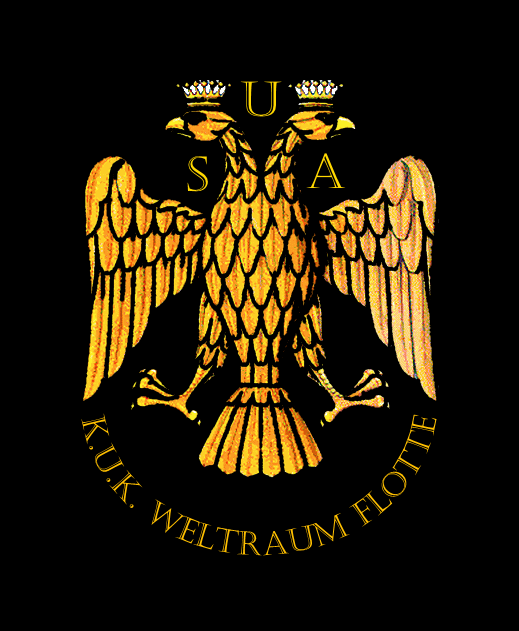
The St. Damian’s Chronicles‘ analog to Foundation would be incomplete without a corresponding Empire and Starfleet, so without further fanfare, I present:

The K.U.K. Space Fleet

KUK Space Fleet+

Continue reading →

← Older posts
Newer posts →

S. Mauritius

Categories

  • Christendom
  • HRM Archive
  • Random Days
  • The World of THE WAR FOR CHRISTENDOM
  • Tower of Ivory

Archives

  • Matthew Scarince's avatar
  • The Imperial Traditionalist's avatar

Copryright Notice:

Written Content of this site (unless otherwise attributed) ©2015-2026 Center for Legitimist Documentation

Create a website or blog at WordPress.com

  • Subscribe Subscribed
    • The War for Christendom
    • Join 92 other subscribers
    • Already have a WordPress.com account? Log in now.
    • The War for Christendom
    • Subscribe Subscribed
    • Sign up
    • Log in
    • Report this content
    • View site in Reader
    • Manage subscriptions
    • Collapse this bar
 

Loading Comments...