Novena for the Canonization of Bl. Karl of Austria: Day Four

Tags

, , , , , , , ,

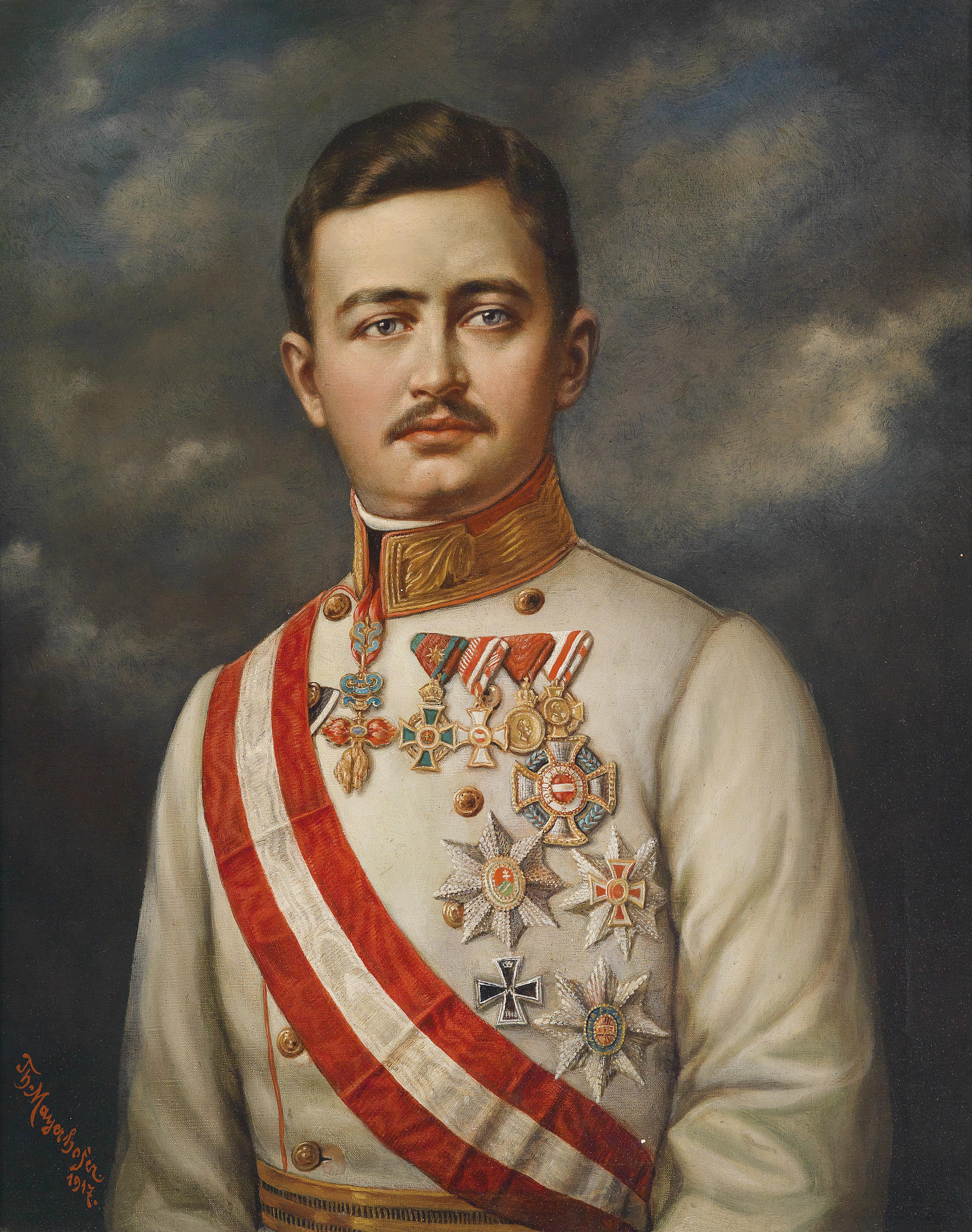
TheLastPaintingoftheEmperor

Opening Prayer

Day Four:
Sharing in Christ’s Passion—Greatness in Suffering

Although Emperor Karl was forced into exile and had to move his family into a crowded villa at the top of a mountain near Funchal, he kept a positive attitude and cheerful disposition. He would say to those who asked: “We are undeservedly fine.” Following Christ’s example, he willingly took up his own cross for the sake of his peoples. He offered his sufferings to Christ crucified: his exile, his concern for the well-being of his homeland and peoples; and his concern for his family, who lacked food, medical supplies, and were living in a damp, unheatable, barely furnished house.

Continue reading

Novena for the Canonization of Bl. Karl of Austria: Day Three

Tags

, , , , , ,

Karlsdeath--Photograph

Opening Prayer

Day Three:
A Life of Sacrifice

“There is no greater love than to lay down one’s life for one’s friends.”

By the time Blessed Emperor Karl was exiled to the island of Madeira his life was already one of making sacrifices for others.

He lost his homeland, empire and throne. His own people confiscated his private money and possessions. Penniless, friendless, and unable to earn a living, he had a wife and seven children, with another one on the way, to support. He was forced to live under foreign control on a far away island in a disagreeably damp house that was not inhabitable. Yet, despite all of these trials he was heroically ready to make sacrifices for others.

Continue reading

Novena for the Canonization of Bl. Karl of Austria: Day Two

Tags

, , , , ,

Karl+SacredHeart

Opening Prayer

Day Two:
An Emperor Devoted to the Sacred Heart of Jesus

“Jesus, gentle and humble of heart, form our hearts to be like Your Heart.”

On October 2, 1918, Blessed Karl consecrated himself and his family to the Sacred Heart of Jesus.

Through his suffering from being misjudged, slandered, and persecuted, his willingness to sacrifice his life for his peoples, his exile, and through his painful, fatal illness, Emperor Karl allowed his heart to be formed in union with the Sacred Heart of Jesus.

Continue reading

Novena for the Canonization of Bl. Karl of Austria: Day One

Tags

, , , , ,

Bl Karl at MassOpening Prayer

Day One:
Reverence for the Most Blessed Sacrament

Blessed Karl lived under the glory of the Blessed Sacrament. The rays of grace from this splendor attracted him, and he loved to visit the tabernacle. Whether stressed by the strains of government or just the ordinary beginning of his day, he sought guidance and solace before Jesus Christ in the tabernacle. Wherever he lived, he sought to have a private chapel where the Blessed Sacrament could be reserved. His devotion to the Eucharist manifested itself even in small details, such as his concern that the sanctuary lamp should never be allowed to go out. Several times a day he would say: “I must go to see if the altar light is still burning.” When he said this, everyone knew that he would be away for some time kneeling and praying before the Blessed Sacrament.

Continue reading

Novena for the Canonization of Bl. Karl of Austria

Tags

, , , ,

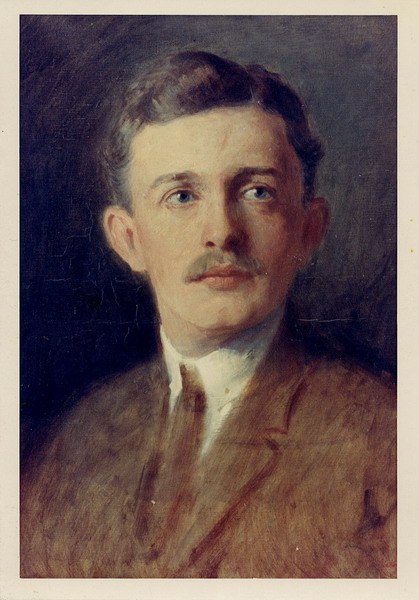
kaiser_karl_i__seliger

Prayer for the Canonization of Blessed Emperor Karl of Austria:

[To be prayed at the beginning of each day of the novena.]

Heavenly Father, through Blessed Emperor Karl You have given Your Church and the people of God an example of how we can live a discerning and spiritual life in a convincing and courageous way.

His public actions as emperor and king, and his personal acts as a family man, were firmly based in the teachings of the Catholic Faith. His love for his Eucharistic Lord grew in times of trial, and helped him to unite himself to Christ’s sacrifice through his own life’s sacrifice for his peoples. Emperor Karl honored the Mother of God, and loved to pray the rosary throughout his life.

Strengthen us by his intercession when discouragement, faintheartedness, loneliness, bitterness and depression trouble us. Let us follow the example of Your faithful servant, and unselfishly serve our brothers and sisters according to Your will.

Hear my petitions and grant my request [mention your intention here].

Grant that Blessed Karl of Austria be deemed worthy of canonization, for the glory of Your Name, the praise of the Blessed Virgin Mary, and for blessings upon the Church.

Amen.

Continue reading

The Threefold Legitimacy of the House of Austria

Tags

, , , ,

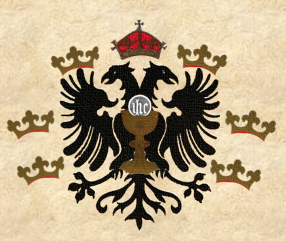
Prophecy of Six Crowns“The most important feature of a well-established and (nationally as well as internationally) recognized monarchy should not be forgotten- legitimacy. Without legitimacy it is impossible to imagine the binding power of agreements, of stability, and peace.”– Erik von Keuhnelt-Leddihn, The Menace of the Herd

The restoration of Catholic government in the Germanies is an essential part of the restoration of Christendom as a whole. It is obvious that this cannot be legitimately accomplished by a Republic or a return to Prussian (or Prussianized) autocratic rule. This raises the problem of legitimate rule, which (though some wish to ignore the fact) is very much a crucial issue. Before discussing legitimacy further, it must first be stated that the in the return of Catholic rule in Europe necessitates the reincorporation of the Germanies (and this includes Belgium, the Netherlands, and Switzerland) as Sovereigns States subsidiarized in the Reich (understood not in the shallow National Socialist sense, but in the deep tradition of Christendom’s Holy Empire).

Continue reading

Seven Stars and Seven Crowns

Tags

, , ,

Coronation of ElessarThe Fellowship of the King is a free Catholic literary magazine inspired by J.R.R. Tolkien’s The Lord of the Rings. As I happen to believe that The Lord of the Rings is the greatest literary work of the 20th century (and also because I have deep personal admiration for Tolkien as a Catholic Author), I was delighted to be able to contribute an article about Monarchy and Tolkien’s work for the magazine’s 2015 Autumn Issue, which by the way is packed full of extremely good content (and this is only part 1 of 3).

The Lord of the Rings is certainly a topic which I will write about a lot in the future, but for now here’s an excerpt from the first paragraph of Seven Stars and Seven Crowns:

The great Catholic author J.R.R. Tolkien once described his masterpiece The Lord of the Rings as a “story is cast in terms of a good side, and a bad side, beauty against ruthless ugliness, tyranny against kingship, moderated freedom with consent against compulsion that has long lost any object save mere power…” Of all these, the battle between Kingship and Tyranny is one of the most deeply Catholic themes in the story. It is also one of the most obvious. Most Catholics who have read The Lord of Rings will rightly recognize in these fictional histories the figure of Aragorn, the prophesied King, as a type of our Lord Jesus Christ, who will return like Aragorn to reclaim His Kingdom. Yet these same Catholics will often overlook a more hidden meaning in the portrayal of Kingship in The Lord of the Rings, for the simple reason that we have forgotten that Christendom also once had an earthly King.

Continue reading…

TFOTK Button

Saint Wenceslaus: Duke and King of Bohemia

Tags

, , ,

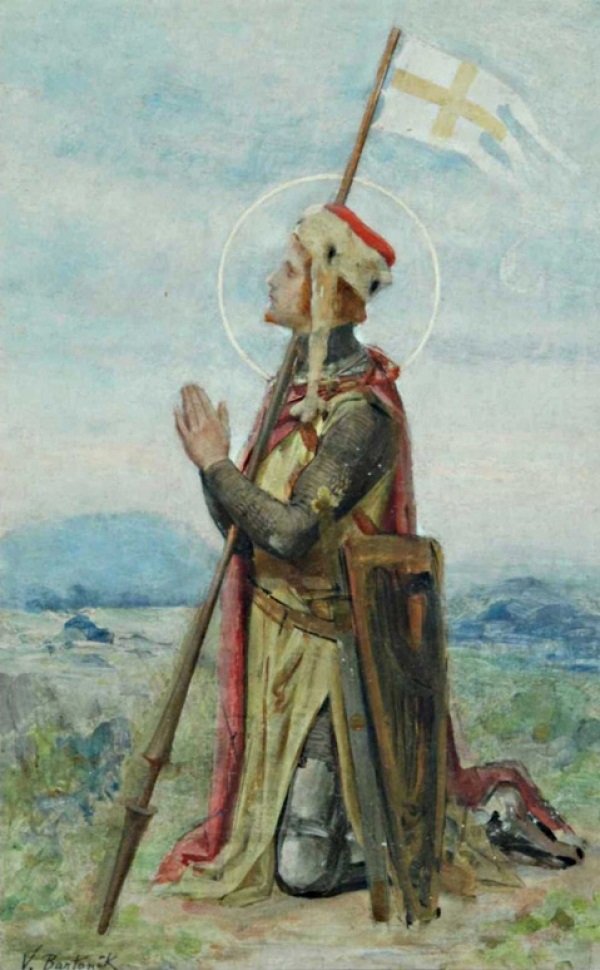
BartonekSvVaclav

Saint Wenceslaus (Václav) of Bohemia is perhaps the most well known of the noble-born saints of the Sacred Ages. Born around the year 907, Wenceslaus was primarily educated by his father Duke Vratislaus and after his father’s death (when his son was only thirteen) his grandmother St. Ludmila. Both Vratislaus and his mother Ludmila were both intent on spreading Catholicism in the many still pagan parts of the realm of Bohemia, and after her son’s death the Duchess took over the education of her grandson to keep him away from the influence of his pagan mother Drahomíra.

Continue reading

Can Church and State Really Be Separate?

Tags

, , , ,

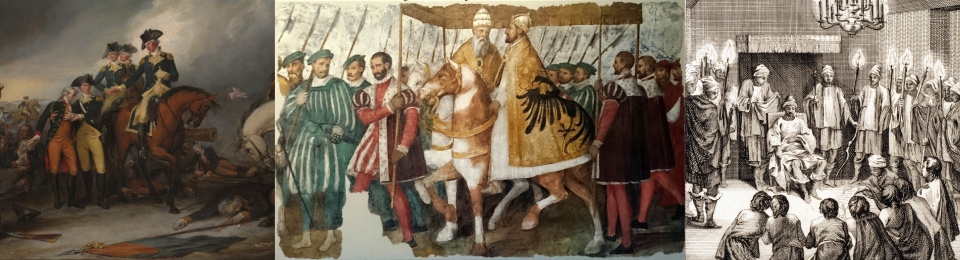
vasari coronation charles v bologna detail

 “The Church ought to be separated from the State, and the State from the Church.” This fundamental principle of modernity was condemned by Pope Bl. Pius IX in his 1864 Syllabus of Errors as incompatible with Catholic teaching, yet today it is almost universally accepted. Is it really possible to separate politics even partially from religion, as secularists and others would have us believe?

Continue reading

Our Lady’s Victory at Vienna

Tags

, , , , , , , , ,

Last week I received an email about my post on the Siege of Vienna from a reader of my site who wishes to be referred to only as an anonymous monk. Having received his permission to publish the body of his letter, I here present it in full, with only the salutation and ending abridged:

WE are all troubled, seeing the wave of Moslems sweeping into Europe.  I hear they are headed primarily for Germany and Austria… indeed, that a large group is marching to Austria right now.

Continue reading