• Home
  • About
  • Contact Us
  • The World of THE WAR FOR CHRISTENDOM
  • On the Current Crisis
  • A Return to a Sane World: Legitimist Manifesto
  • Related Links

The War for Christendom

~ Center for Legitimist Documentation

The War for Christendom

Tag Archives: Politics

“Carlism in the Kingdom of Naples” reviewed by Giovanni di Napoli

01 Sunday Jun 2025

Posted by Matthew Scarince in Christendom

≈ Leave a comment

Tags

Carlism, Giovanni di Napoli, Il Regno, Legitimism, localism, Patriotism, Politics, Two Sicilies

Over on the website Il Regno, Giovanni di Napoli has published an excellent review and summary of an essay by Gianandrea de Antonellis entitled “A Concrete Case: Carlism in the Kingdom of Naples.” Di Napoli’s review translates and highlights some of the major points connecting the political tradition of Spanish Carlism to the historical Kingdom of Naples (the mainland possessions of the Kingdom of Sicily). When the call went out from Rome for the support of the Sicilian Kingdom against the piratical invasion and oppression of loyalists following the “unification of Italy” in 1861, veterans of the armies of the Carlist Wars answered the call. Most notable among them were General José Borjes, who lost his life in the conflict, and General Rafael Tristany, who was fated to die in exile far from his Catalonian homeland. De Antonellis highlights four essential pillars of Carlist ideology that also formed the socio-political basis for the Neapolitan Kingdom.

The first of these is Catholicism, as in Di Napoli’s words, “historically essential to Neapolitan identity.” An understanding of religion not only as a guiding principle for political life, but permeating the soil, illuminating and extending outwards the love of the village, from the countryside, through the great institutions of the political realm, and to the community of peoples bound together by a common Faith. Thus as De Antonellis explains,

Importantly, love for one’s homeland does not compete with the patriotism of others. Nationalism, on the other hand, does create rivalry—French vs. Germans, Northern Italians vs. Neapolitans, etc. True patriotism is different: one who loves their homeland sees a kindred spirit in someone who loves theirs, just like someone who deeply loves their own mother respects others who love theirs.

This intertwining of Patriotism and Religion leads naturally to the upholding of both natural and particular rights, which in turn bolster the rule of law against the vicissitudes of purely positivistic regimes. These three principles of Catholicism, patriotism, and localism (Dios, Patria, and Fueros in Carlist parlance) come together in the active defense of the institutions of Legitimate Government. De Antonellis writes of “two aspects” of Legitimacy, “origin and exercise.” These aspects will undoubtedly be familiar to any disciples of the “Austrian School” of Legitimist thought, referenced by Dr. Zeßner-Spitzenberg as legitima institutio and iustitiæ moderatio: lawful institution and the guiding principle of justice.

I would highly recommend di Napoli’s review and translation of “Carlism in the Kingdom of Naples” to readers of this site, as it touches on elements of the Legitimist tradition that I cannot present with the deserved attention in such a short post. Both the review and the article end with a strong rebuke to those who would renounce the Iberian period of Neapolitan history as a sterile backwater devoid of cultural value. On the contrary, the period of Viceroyalty, though troubled in many ways, was a period of great cultural dynamism and advancement, not least in the political tradition that one can rightfully call the crowning achievement of the Western World.
Visit Il Regno

New Essay: “Ruled by Different Rhythms”

22 Thursday Jun 2023

Posted by Matthew Scarince in Christendom

≈ 1 Comment

Tags

Augusto Del Noce, Basilicata, Carlo Levi, Culture, Film, Francesco Rosi, Genealogies of Modernity, Modernity, Personalism, Politics, Totalitarianism

Gagliano_1

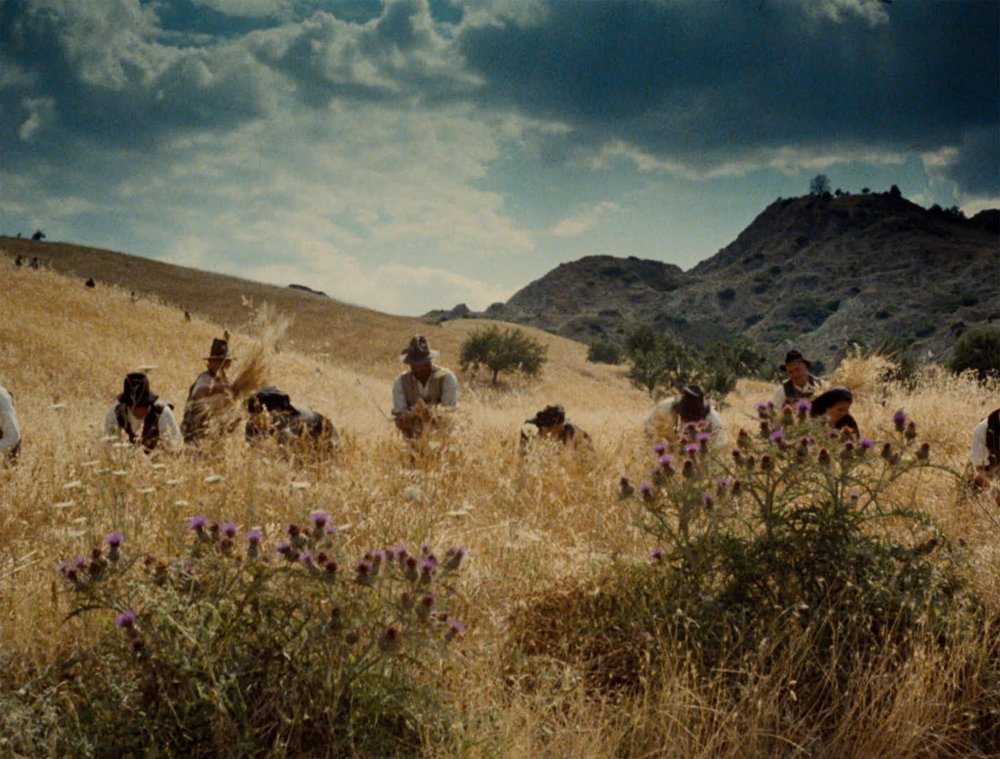
My second essay for the journal Genealogies of Modernity, “Ruled By Different Rhythms” was just published. In this essay I continue to explore the philosophical conversation between writer Augusto Del Noce and filmmaker Francesco Rosi with his film adaptation of Carlo Levi’s autobiographical book, Christ Stopped at Eboli. Here’s an excerpt:

“Christ never came here,” writes Carlo Levi, describing the desolate village of Gagliano in the hinterlands of southern Italy to which he was exiled in 1935. “Christ stopped along the coast, at Eboli.” Internal exile is a strange concept in the digital age. For a generation raised with the global reach of the internet, to whom landscapes are defined by interstate highways and airports rather than by hills and villages, this technique of isolating a political opponent seems absurd and trivial. Francesco Rosi begins his four-part TV miniseries adaptation of Levi’s year of exile (Christ Stopped at Eboli, 1979) by emphasizing his isolation: though constantly escorted, Levi is alone, his light grey suit of a fashionable cut standing out against the unrelenting black clothing of the Lucanese peasants and the dark overcast sky. They are visible only in their poverty; they are, as Rosi’s contemporary and fellow director Vittorio De Seta once titled them, “the Forgotten.” And to the inhabitants of Basilicata (ancient Lucania), the doctor from Turin is a foreigner in their forgotten country.

Read the whole essay here: https://genealogiesofmodernity.org/journal/2023/6/21/ruled-by-different-rhythms

Legitimacy and Legality Part IV: The Situation in Austria

23 Monday Jan 2023

Posted by Matthew Scarince in Christendom

≈ Leave a comment

Tags

Austria, Authority, Habsburg, Hans Karl von Zessner-Spitzenberg, Legality, Legitimacy, Politics, Restoration

Zessner_SpitzenbergLegitimitat

By Dr. Hans Karl von Zeßner-Spitzenberg

Translated by M. T. Scarince

Translator’s note: This is the final part in a series of posts translating the work of Austrian Legitimist philosopher Hans Karl Freiherr von Zeßner-Spitzenberg (1885-1938), an active member of the Kaiser-Karl-Gebetsliga and a martyr for the cause of Austrian independence from the National Socialist occupation. Read Part I, Part II, Part III. 

II. Let us now apply these principles to the situation in Austria today.

For such an application to the Austrian situation to be of any use, everything else will be self-evident when there is clarity as to whether or not a lawful, legitimate acquisition of power is found at the infancy of today’s public authorities, or a breach of law, the moral wrong of violating existing authorities and better rights of rule. After that, the question of whether we are dealing with a merely legal power, or whether this power is free from any restitution obligation due to foreign violation of rights and therefore can be called a legitimate authority, is decided. 

Continue reading →

Legitimacy and Legality Part III: A Brief Outline of the System 5.-9.

18 Wednesday Aug 2021

Posted by Matthew Scarince in Christendom

≈ 3 Comments

Tags

Authority, christendom, Hans Karl von Zessner-Spitzenberg, Legality, Legitimacy, Politics, Power, Reparation, Restoration, Usurpation

Zessner_SpitzenbergLegitimitat

By Dr. Hans Karl von Zeßner-Spitzenberg

Translated by M. T. Scarince

Translator’s note: This is the third part in a series of posts translating the work of Austrian Legitimist philosopher Hans Karl Freiherr von Zeßner-Spitzenberg (1885-1938), an active member of the Kaiser-Karl-Gebetsliga and a martyr for the cause of Austrian independence from the National Socialist occupation. Read Part I, Part II, Part IV.

5. Legality 

Legal refers to a state power which actually exists as a state power, as legislation and guardian of the law, which operates as such and as such has de facto asserted itself in public life. It fulfills the basic moral purpose of the state, the maintenance of public order, and thus the care of the Common Good by means of the basic element of the state’s power of order (i.e. by means of the positive legal regulation of social relations); namely, when it keeps itself bound to the positive legal order given and represented by it, when it sets the predetermined legal ways and measures in place of arbitrary acts of violence. These two moments, the actual establishment of order and one’s own commitment to it, are what make a force legal state power, in contrast to arbitrary and violent rule on the one hand and to revolutionary, adventurist, street-thug or tyrant rule on the other, which do not guarantee the moral original purpose of state power: public order and the Common Good through positive statutes. 

Continue reading →

Legitimacy and Legality Part II: A Brief Outline of the System 1.-4.

17 Tuesday Aug 2021

Posted by Matthew Scarince in Christendom

≈ 4 Comments

Tags

Authority, Hans Karl von Zessner-Spitzenberg, Legality, Legitimacy, Legitimism, Politics

Zessner_Spitzenberg

By Dr. Hans Karl von Zeßner-Spitzenberg

Translated by M. T. Scarince

Translator’s note: This is the second part in a series of posts translating the work of Austrian Legitimist philosopher Hans Karl Freiherr von Zeßner-Spitzenberg (1885-1938), an active member of the Kaiser-Karl-Gebetsliga and a martyr for the cause of Austrian independence from the National Socialist occupation. Read Part I, Part III, Part IV.

For the purposes of this work, the following system is briefly outlined:

1. Morality and Public Law

Public powers and public legal systems are also essentially subject to the same moral principles and stand within the framework of the same Divine world order as private rights, powers and authorities. Here also, human beings are their bearers, responsible for their institution and exercise. Here also, we are dealing with the powers of individuals or entire communities in the fulfillment of a profession, which, like every profession, must serve (after God’s glory) not only the beneficiary himself or the community which he serves, but also the good of his fellow men.

Indeed, the power-competence in this case is necessarily more strongly directed towards authoritative ordering power of the rights of others than it is elsewhere, on account of the main goal of public order; here also it is only within the framework of the Eternal order, which protects and recognizes the appropriate vested rights and inviolable jurisdiction of individuals. From the moral point of view, therefore, public law can be distinguished from private law in these matters only in its object and in its particular purpose, but not in general demands and basic attitudes.

Continue reading →

The Peace-Emperor: A Personal Reflection

21 Wednesday Oct 2020

Posted by Matthew Scarince in Christendom

≈ 3 Comments

Tags

Bl. Karl of Austria, Blessed Karl of Austria, Blessed Sacrament, Blessed Virgin Mary, christendom, Holy Eucharist, Politics

As the world sees these things, the emperor’s brief life was a tragedy; his empress’ long wait an exercise in illusion. But the truth is that, devoted to their Faith, their peoples, their children, and each other, they saw far more clearly than those whom fortune or Providence gave more power to – more than Wilson, the kaiser’s generals, Clemenceau, or Lloyd George. The pettiness of the Czernins, the Renners, and the Horthys that line their path merely serve, a century on, to underline their true greatness.

-Charles Coulombe, Blessed Charles of Austria: A Holy Emperor and His Legacy

Praying last night in the Church of Santa Maria dell’Anima, I felt enveloped in a deep serenity. Time, the fleeting world, passed into the obscurity of earthly twilight: the Eucharistic Sun alone remained shining forth His rays to comfort this deeply afflicted world. In this year of crisis, it is easy to fall prey to doubt, to let ” the care of this world and the deceitfulness of riches choketh up the Word” in our lives. In these moments, the saints show us the path of virtue, guide us to the light of the Sun of Justice. And there in the presence of Our Lady of the Soul, my own soul saw for the first time that the anxiety and turmoil we now face is as nothing to the Eternal Peace which one courageous saint tried to make present in a small way on earth a little over a century ago.

Continue reading →

Brief Reflection on Localist Legitimism

19 Tuesday May 2020

Posted by Matthew Scarince in Christendom, HRM Archive

≈ 3 Comments

Tags

Coronavrius, Kingdom of Two Sicilies, Legitimism, Legitimist, localist legitimism, Politics

Enrico Fratangelo, mayor of Castellino del Biferno in Mulise, is not a legitimist. He acts as a loyal public servant of the Republic of Italy and as he says he “sang the anthem of Italy at the top of my voice.” But in the past few months, due to the Coronavirus pandemic and subsequent crisis, Fratangelo is praticing what can only be called localist legitimist politics. He has begun printing money called ducati, bearing the Coat of Arms of the Kingdom of Two Sicilies, images of Our Lady or the Saints, and bearing the inscription:

“Flourishing and Peaceful community of the Kingdom of Naples, County of Molise, land of Workers and of Patriots called Brigands. From 1861, land of unemployment and emigration.”

Continue reading →

The Legacy of Blessed Karl 100 Years Later: A Call to Act

21 Sunday Oct 2018

Posted by Matthew Scarince in Christendom, HRM Archive

≈ 5 Comments

Tags

Authority, Blessed Karl of Austria, Canonization, christendom, Code of Conduct, Gene Wolfe, Otto von Habsburg, Politics, St. John Paul II, World War I, World War II

From the beginning, the Emperor Charles conceived of his office as a holy service to his people. His chief concern was to follow the Christian vocation to holiness also in his political actions.

-St. John Paul II, Homily for the Beatification of Blessed Karl

In a time of war and destruction, when all the safety and comfort of society was collapsing, a noble man gave his life for his peoples. For two long years he pleaded with his enemies to find some way to bring peace to his war-torn country. He began a wave of reform which swept away the corruption and decay which the war had brought to light. But he was alone, his enemies were relentless and his allies unwilling to give up on the phantom of total victory. In the end he died alone, exiled on an island far from his homeland. Yet his son took upon himself his father’s burden, and lived to see the evils his father had struggled so fiercely against utterly destroyed.

This story sounds so much like a myth, a fairy-tale to inspire children. But this is only because fairy-tales are the closest to true history of all stories we tell. You may well ask in this age of corrupt politicians and mob mentality, is it even possible that one man could stand against the world of his time, and so courageously that his impact on it remained long after his death? My answer to you is yes, that this man lived, and that his name was Karl von Habsburg-Lothringen, by the grace of God, Emperor and King. And most surprisingly of all, the time he lived in was much worse than our own.

Continue reading →

When Nobility Is More Than Just Passé

05 Monday Mar 2018

Posted by Matthew Scarince in Christendom, HRM Archive

≈ Leave a comment

Tags

Karl von Habsburg, Nobility, Politics

Isn’t Nobility passé?

For people who consider titles of Nobility not as decorations, but as obligations and duties, no! Nobility as an example to follow has always had meaning.

-Karl von Habsburg-Lothringen, in an interview with Kronen Zeitung

Blessed Carolus, Holy Roman Emperor

28 Saturday Jan 2017

Posted by Matthew Scarince in Christendom

≈ 3 Comments

Tags

Carolus Magnus, Charlemagne, christendom, Civilization, Father of Europe, History, Holy Roman Empire, Imperial History, Politics, Sacred Ages, Sacretemporal

thaya_pfarrkirche_-_fenster_1a_karl_der_grose

On the most Holy Day of the Nativity of the Lord when the King rose from praying at Mass before the tomb of biased Peter the Apostle, Pope Leo placed a crown on his head and all the Roman people cried out, “To Carolus, pious Augustus, crowned by God, great and peace giving Emperor of the Romans, life and victory.” And after the laudation he was honoured by the pope in the manner of the ancient princes and, the title of Patrician being set aside, he was called Emperor and Augustus.

Of all the rulers of the Holy Roman Empire the most renowned, the first to receive the golden Imperial Crown from the hands of the Roman Pontiff, no Emperor has so captured the Catholic imagination as Carolus Magnus, the Emperor Charlemagne. The beginning of the Sacred Ages might truly be dated to his coronation on the feast of the Nativity of Our Lord. Born on the second of April in the year of Our Lord 742 in the realm of Austrasia, Karol (as he was named in old Frankish) was the oldest son of Pippin the Short, King of Francia and Patrician of the Roman Empire. Upon the death of King Pippin in A.D. 768, Karol and his younger brother Karloman jointly ascended to the Frankish throne, in the midst of a rebellion in Aquitania.

Continue reading →

← Older posts

S. Mauritius

Categories

  • Christendom
  • HRM Archive
  • Random Days
  • The World of THE WAR FOR CHRISTENDOM
  • Tower of Ivory

Archives

  • Matthew Scarince's avatar
  • The Imperial Traditionalist's avatar

Copryright Notice:

Written Content of this site (unless otherwise attributed) ©2015-2024 Center for Legitimist Documentation

Create a website or blog at WordPress.com

  • Subscribe Subscribed
    • The War for Christendom
    • Join 92 other subscribers
    • Already have a WordPress.com account? Log in now.
    • The War for Christendom
    • Subscribe Subscribed
    • Sign up
    • Log in
    • Report this content
    • View site in Reader
    • Manage subscriptions
    • Collapse this bar
 

Loading Comments...