Christ the King and the Holy Empire

Tags

, , , , ,

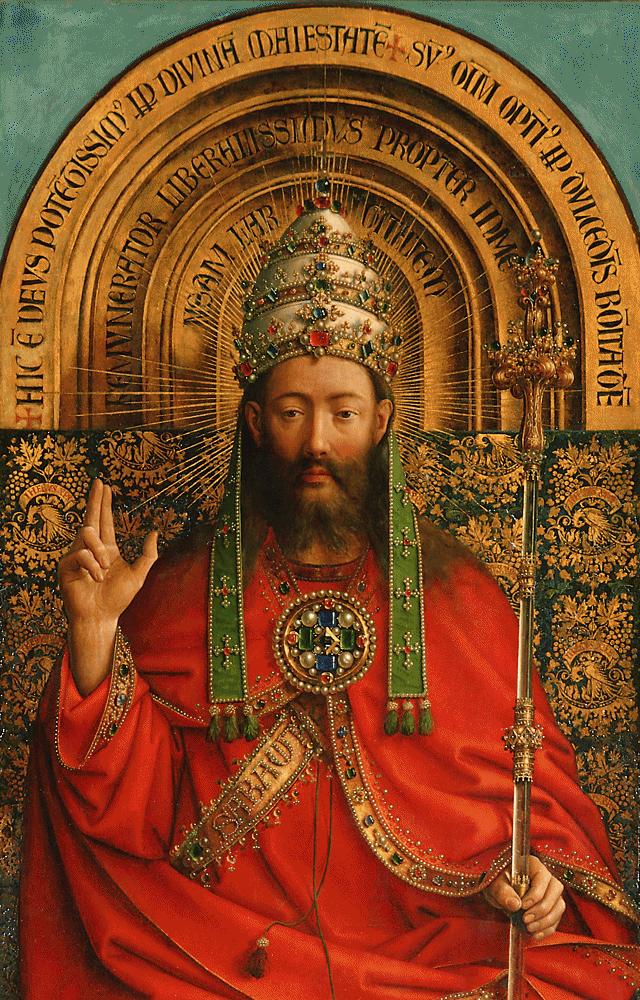
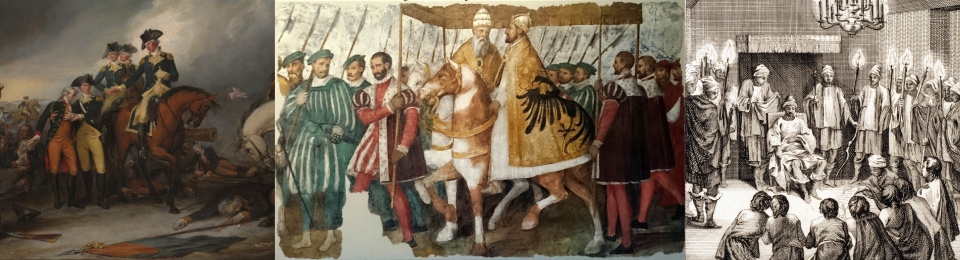
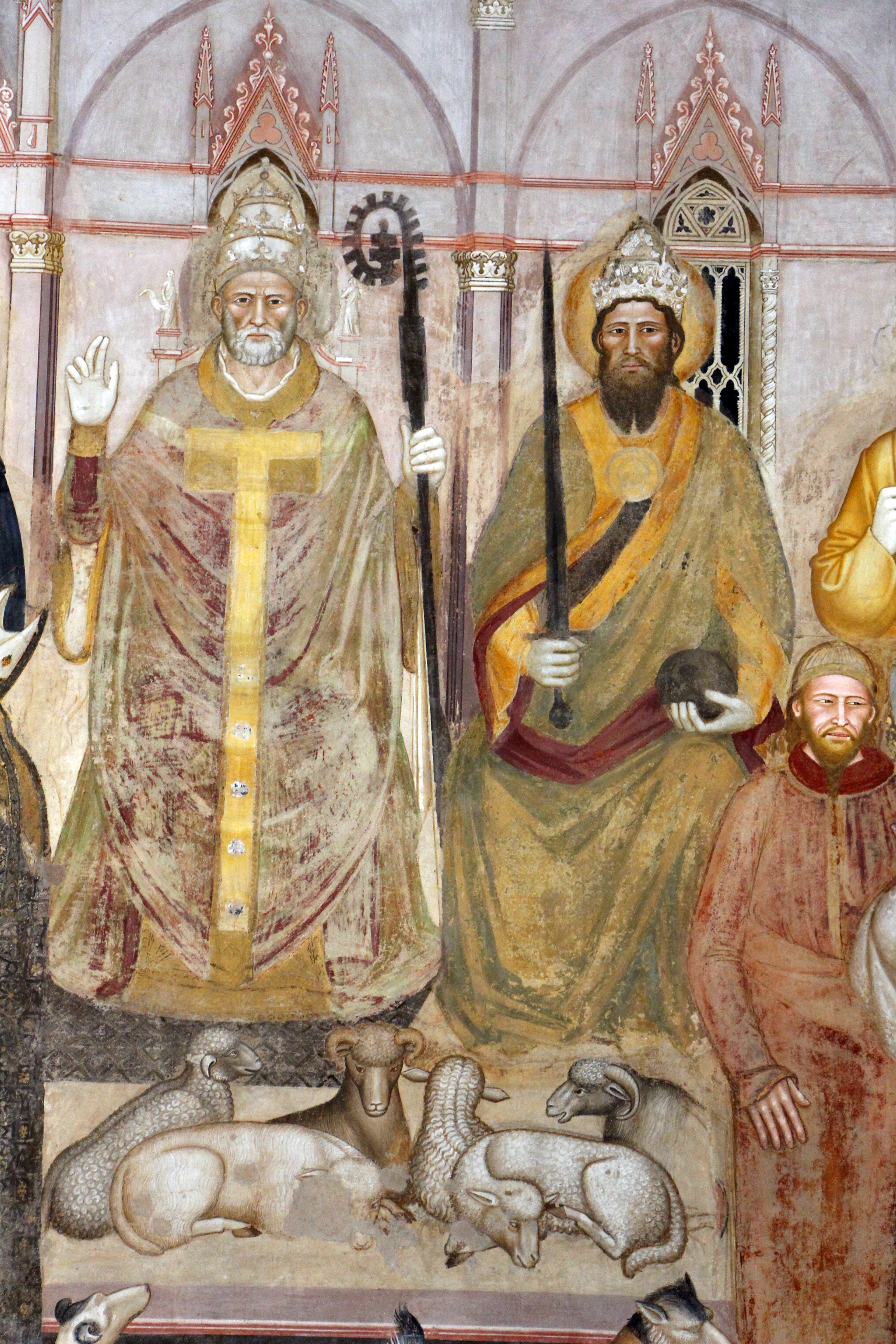
Retable_de_l'Agneau_mystique_(2)When Pope Pius XI instituted the Solemn Feast of Christ the King in 1925, the last vestige of the Holy Roman Empire had been removed from the Modern World. The Modern World had no use for emperors and kings, nor did it acknowledge the Kingship of our Lord Jesus Christ over the entire world, which He will reclaim in the End of Days.

Continue reading

The Beginning of Tower of Ivory

Tags

, , , , ,

Tower of Ivory cover1

It’s been a while since I’ve posted an excerpt from my novel-in-process Tower of Ivory, so I thought I’d give you, my readers, a chance to read the first paragraphs, in which our hero, John Lorran, arrives at the INA, the eponymous white tower:

It was at that time that the tide of darkness was first turned back, a time of heroes and saints, of legends. The greatest of these legends begins far in the north of the world, where a young man struggles for the fulfillment of his great destiny and the fate of the world itself… (Catholic Encyclopedia 117th Edition)

The waves crashed forlornly against a bare rocky isle in the North Atlantic. Well, at least against what should have been a bare isle, if the fate of the world had been different. For clearly visible against the sky was a lofty white tower. In fact, standing on the deck of the approaching transport, the tower became visible long before the island.

Such was the view of a fifteen year old boy whose brown hair was the same color as his intelligent eyes with which he viewed for the first time this lonely section of the northern ocean. A look of caution was plain on his face as his thoughts turned toward home and all he knew… 

Saint Leopold the Good: Margrave of Austria

Tags

, , , , ,

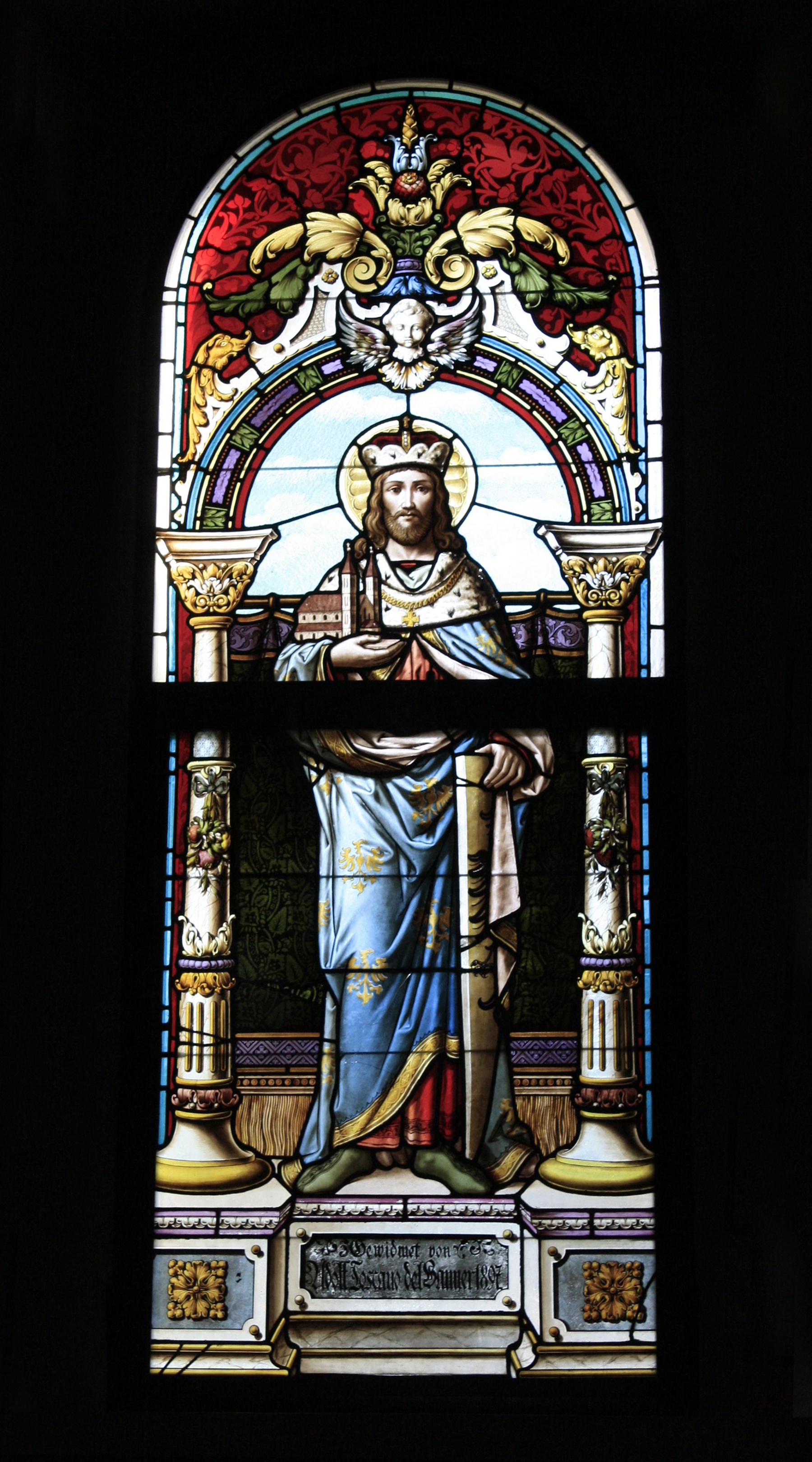
Saint_Leopold_III_Margrave_of_Austria_(Church_at_Gaaden)

Gloriosus apparuisti inter principes Austriae, sancte Leopolde, ideo diadema suscepisti de manu Domini; ora pro nobis ad Deum qui te elegit.- Antiphon for the Feast of Saint Leopold

Among the greatest of the rulers of Austria, Saint Leopold was born in Castle of Babenberg in Lower Austria in 1073. Raised under the influence of the bishop St. Altmann, Leopold was firm supporter of the Church during the confusing struggle of the Investiture Controversy. He succeeded his father, Count Leopold II, as Markgraf (March Count or Margrave) of Austria at the age of twenty-three. His first wife having died 1105, he married Agnes of Waiblingen, the sister of Emperor Henry V, and the widow of Frederick Hohenstaufen.

Continue reading

This Is Not Austria…

Tags

, , , ,

The Republiksadler: the dumbest looking eagle ever.

The Republiksadler: the dumbest looking eagle ever

The Alpine Republic of Austria has made every imaginable effort to deny its historic roots going back to the Austro-Hungarian monarchy. It shed all the symbols recalling the Hapsburg monarchy either in the form of the Danubian monarchy or its real matrix, the Holy Roman Empire.- Erik von Kuehnelt-Leddihn, Leftism

The Republiksadler (pictured above) may symbolize many things, but it does not symbolize Austria. The singled-headed eagle may symbolize the Republic, but it does not symbolize Austria. The mural crown on its head may symbolized the Middle Class, or it may symbolize the triumph of Oligarchy, but it does not symbolize Austria. The Hammer and Sickle in its talons may represent Industry and Agriculture, or they may represent the pomps and empty promises of Socialism, but they does not represent Austria.

Austria is an ideal which the Left will never understand, a concept which they cannot grasp. Austria is not some tourist country with scenic mountains. Austria is the sacred homeland of Emperors, Noricum of old, the very heart of Christendom. Austria stands for civilization, for the fight against the Great Defeat in hope of the final Victory.

Of course, our Victory is their defeat, and the truth is on our side- or rather, we are on the side of the Truth. That is the reason for the Republiksadler, and the Republik it represents. False history and false symbols are necessary to hide the truth, yet the Truth will not be hidden for long.

Austriae est imperare orbi universo

Wappen_Kaisertum_Österreich_1815_(Klein)

Blessed Karl of Austria

Tags

, , , , , , , ,

Sr.Majestät Kaiser Karl. (Reproduktion.)

The decisive task of Christians consists in seeking, recognizing and following God’s will in all things. The Christian statesman, Charles of Austria, confronted this challenge every day. To his eyes, war appeared as “something appalling”. Amid the tumult of the First World War, he strove to promote the peace initiative of my Predecessor, Benedict XV.

From the beginning, the Emperor Charles conceived of his office as a holy service to his people. His chief concern was to follow the Christian vocation to holiness also in his political actions. For this reason, his thoughts turned to social assistance. May he be an example for all of us, especially for those who have political responsibilities in Europe today!- Pope St. John Paul II

These few sentences eloquently express the heroic life of Blessed Karl, the Last Emperor and King. Pope Saint Pius X said of him that he was “Heaven’s reward to Austria for all her faithfulness to Pope and Church.” He took his sacred duty as King-Emperor as it was meant to be taken. He magnificently conveyed the principle of Catholic Kingship: “I have done my duty, as I came here to do. As crowned King, I not only have a right, I also have a duty. I must uphold the right, the dignity and honor of the Crown…. For me, this is not something light. With the last breath of my life I must take the path of duty. Whatever I regret, Our Lord and Savior has led me.”

Continue reading

Novena for the Canonization of Bl. Karl of Austria: Day Nine

Tags

, , , , , , , ,

Karl+and+Our+Lady+Mary

Opening Prayer

Day Nine:
The Blessed Virgin Mary

On the day of his death the Emperor asked his wife which day it was. “The Mother of God’s day,” answered the Empress. “Saturday, then,” he confirmed delighted. After his death, the body of Emperor Karl was placed in the Marian church of Nossa Senhora do Monte on Madeira, where it still rests today.

Continue reading

Novena for the Canonization of Bl. Karl of Austria: Day Eight

Tags

, , , , , , , ,

Se__k__und_k__Hoheit_FML__Erzherzog_Karl_Franz_Josef_1916_E__Förster

Opening Prayer

Day Eight:
Faithful Fulfillment of the Will of God

Emperor Karl sought the Will of God in everything he did. For him it was the most important principle of his life and all of his actions. Eyewitnesses also tell of his love of chastity, and his absolute refusal to tolerate indecent language in his presence.

Continue reading

Novena for the Canonization of Bl. Karl of Austria: Day Seven

Tags

, , , , , , , ,

karlcoronation

Opening Prayer

Day Seven:
The Sovereign

Eyewitnesses praise Blessed Karl’s profound sense of duty. He understood the obligation of emperor given to him as a sacred trust, and saw himself as a father to his peoples. In a conversation with Count Polzer-Hoditz on April 28, 1917, the Emperor said: “It comes down, however, to simply help as much as one can help. As emperor I must set a good example. If everyone would only practice his Christian duty, there would not be so much hate and misery in the world.” His love for neighbor was exemplary. To ease the suffering of his war-weary peoples, Emperor Karl ordered that the palace horses and wagons be put into service to deliver coal to the Viennese population, donated much of his private fortune to the poor, and even gave away clothes from his own closet to the needy.

Continue reading

Novena for the Canonization of Bl. Karl of Austria: Day Six

Tags

, , , , , , , ,

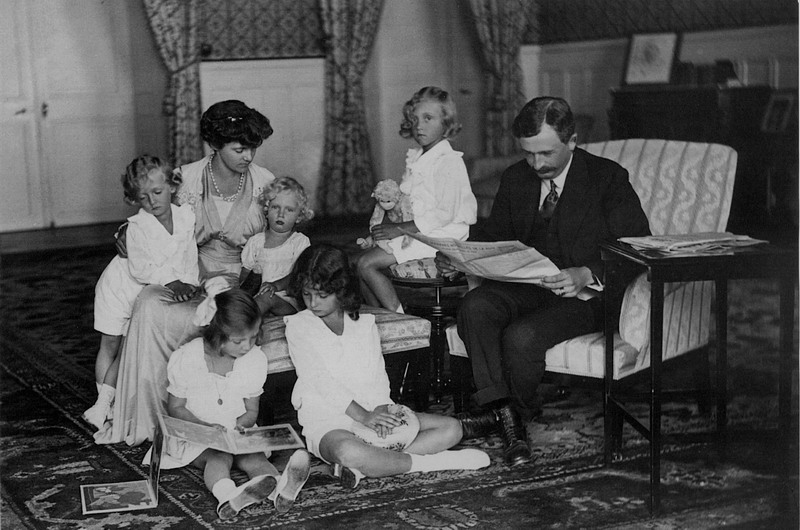
Karl Relaxing with his Family

Opening Prayer

Day Six:
Devoted Father

One of the biggest hardships for Emperor Karl was the separation from his children as he and Empress Zita were sent into exile on Madeira. The children remained in Switzerland until Empress Zita, with many restrictions, could travel there and bring them back with her to Madeira.

Continue reading

Novena for the Canonization of Bl. Karl of Austria: Day Five

Tags

, , , , , , , ,

Theodor_Mayerhofer_Kaiser_Karl_I_von_österreich_1917Opening Prayer

Day Five:
“Love Your Enemy”

The Emperor heroically practiced the commandment to “love your enemy.”

Throughout his life he continually, and in exemplary ways, pardoned others. Emperor Karl suffered greatly from lies, slander and many hardships throughout his life. Yet, the ultimate example of his pardoning others were the words he uttered on his deathbed: “I forgive all my enemies, all who have slandered me, and all who have worked against me.”

Continue reading