• Home
  • About
  • Contact Us
  • The World of THE WAR FOR CHRISTENDOM
  • On the Current Crisis
  • A Return to a Sane World: Legitimist Manifesto
  • Related Links

The War for Christendom

~ Center for Legitimist Documentation

The War for Christendom

Category Archives: Christendom

“Carlism in the Kingdom of Naples” reviewed by Giovanni di Napoli

01 Sunday Jun 2025

Posted by Matthew Scarince in Christendom

≈ Leave a comment

Tags

Carlism, Giovanni di Napoli, Il Regno, Legitimism, localism, Patriotism, Politics, Two Sicilies

Over on the website Il Regno, Giovanni di Napoli has published an excellent review and summary of an essay by Gianandrea de Antonellis entitled “A Concrete Case: Carlism in the Kingdom of Naples.” Di Napoli’s review translates and highlights some of the major points connecting the political tradition of Spanish Carlism to the historical Kingdom of Naples (the mainland possessions of the Kingdom of Sicily). When the call went out from Rome for the support of the Sicilian Kingdom against the piratical invasion and oppression of loyalists following the “unification of Italy” in 1861, veterans of the armies of the Carlist Wars answered the call. Most notable among them were General José Borjes, who lost his life in the conflict, and General Rafael Tristany, who was fated to die in exile far from his Catalonian homeland. De Antonellis highlights four essential pillars of Carlist ideology that also formed the socio-political basis for the Neapolitan Kingdom.

The first of these is Catholicism, as in Di Napoli’s words, “historically essential to Neapolitan identity.” An understanding of religion not only as a guiding principle for political life, but permeating the soil, illuminating and extending outwards the love of the village, from the countryside, through the great institutions of the political realm, and to the community of peoples bound together by a common Faith. Thus as De Antonellis explains,

Importantly, love for one’s homeland does not compete with the patriotism of others. Nationalism, on the other hand, does create rivalry—French vs. Germans, Northern Italians vs. Neapolitans, etc. True patriotism is different: one who loves their homeland sees a kindred spirit in someone who loves theirs, just like someone who deeply loves their own mother respects others who love theirs.

This intertwining of Patriotism and Religion leads naturally to the upholding of both natural and particular rights, which in turn bolster the rule of law against the vicissitudes of purely positivistic regimes. These three principles of Catholicism, patriotism, and localism (Dios, Patria, and Fueros in Carlist parlance) come together in the active defense of the institutions of Legitimate Government. De Antonellis writes of “two aspects” of Legitimacy, “origin and exercise.” These aspects will undoubtedly be familiar to any disciples of the “Austrian School” of Legitimist thought, referenced by Dr. Zeßner-Spitzenberg as legitima institutio and iustitiæ moderatio: lawful institution and the guiding principle of justice.

I would highly recommend di Napoli’s review and translation of “Carlism in the Kingdom of Naples” to readers of this site, as it touches on elements of the Legitimist tradition that I cannot present with the deserved attention in such a short post. Both the review and the article end with a strong rebuke to those who would renounce the Iberian period of Neapolitan history as a sterile backwater devoid of cultural value. On the contrary, the period of Viceroyalty, though troubled in many ways, was a period of great cultural dynamism and advancement, not least in the political tradition that one can rightfully call the crowning achievement of the Western World.

Visit Il Regno

Legitimacy and Revolutionism: Part II

15 Thursday May 2025

Posted by Matthew Scarince in Christendom

≈ 1 Comment

By Orestes A. Brownson

As found in The Works of Orestes A. Brownson, edited by Henry F. Brownson. Originally published in Brownson’s Quarterly Review in October 1848 as a single article, it has been here split into two parts for the reader’s convenience. Read Part I here.

The conservative doctrine which we have contended for, and which does not happen to please some of our readers, follows necessarily from this doctrine of the divine origin and right of government. No one particular form of government exists by divine right for every people, but every form so exists for the particular nation of which it is the established order. The established order, the constitution of the state, which God in his providence has given to a particular people, which is coeval with that people, has grown up with it, and is identified with its whole public life, is the legitimate order, the legal constitution, and therefore sacred and inviolable. If sacred and inviolable, it must be preserved, and no changes or innovations under the name of progress or reform, that would abolish or essentially alter it, or that would in any degree impair its free, vigorous, and healthy action, can be tolerated.

Continue reading →

Legitimacy and Revolutionism: Part I

15 Thursday May 2025

Posted by Matthew Scarince in Christendom

≈ 1 Comment

By Orestes A. Brownson

As found in The Works of Orestes A. Brownson, edited by Henry F. Brownson. Originally published in Brownson’s Quarterly Review in October 1848 as a single article, it has been here split into two parts for the reader’s convenience. Read Part II here.

We take, in our political essays, unwearied pains to make ourselves understood, and to guard against being misapprehended; but, through our own fault or that of our readers, our success has rarely corresponded to our efforts. On all sides, from all quarters, we are charged with being hostile to liberty and favorable to despotism, — the enemy of the people, and the friend of their oppressors. We could smile at this ridiculous charge, were it not that some honest souls are found who appear to believe it, and some moon-struck scribblers make it the occasion of exciting unjust prejudices against our friends, and of placing them, as well as ourselves, in a false position before the public. Injustice to us personally is of no moment, and demands of us no attention; but when, owing to our peculiar position, it can hardly fail to work injustice to others, we are bound to notice and to repel it.

Continue reading →

New Essay at The European Conservative: “The Forgotten European”

02 Friday Feb 2024

Posted by Matthew Scarince in Christendom

≈ 1 Comment

Tags

Abendland, Catholicism, christendom, Europe, European Union, Hermann Platz, Otto von Habsburg

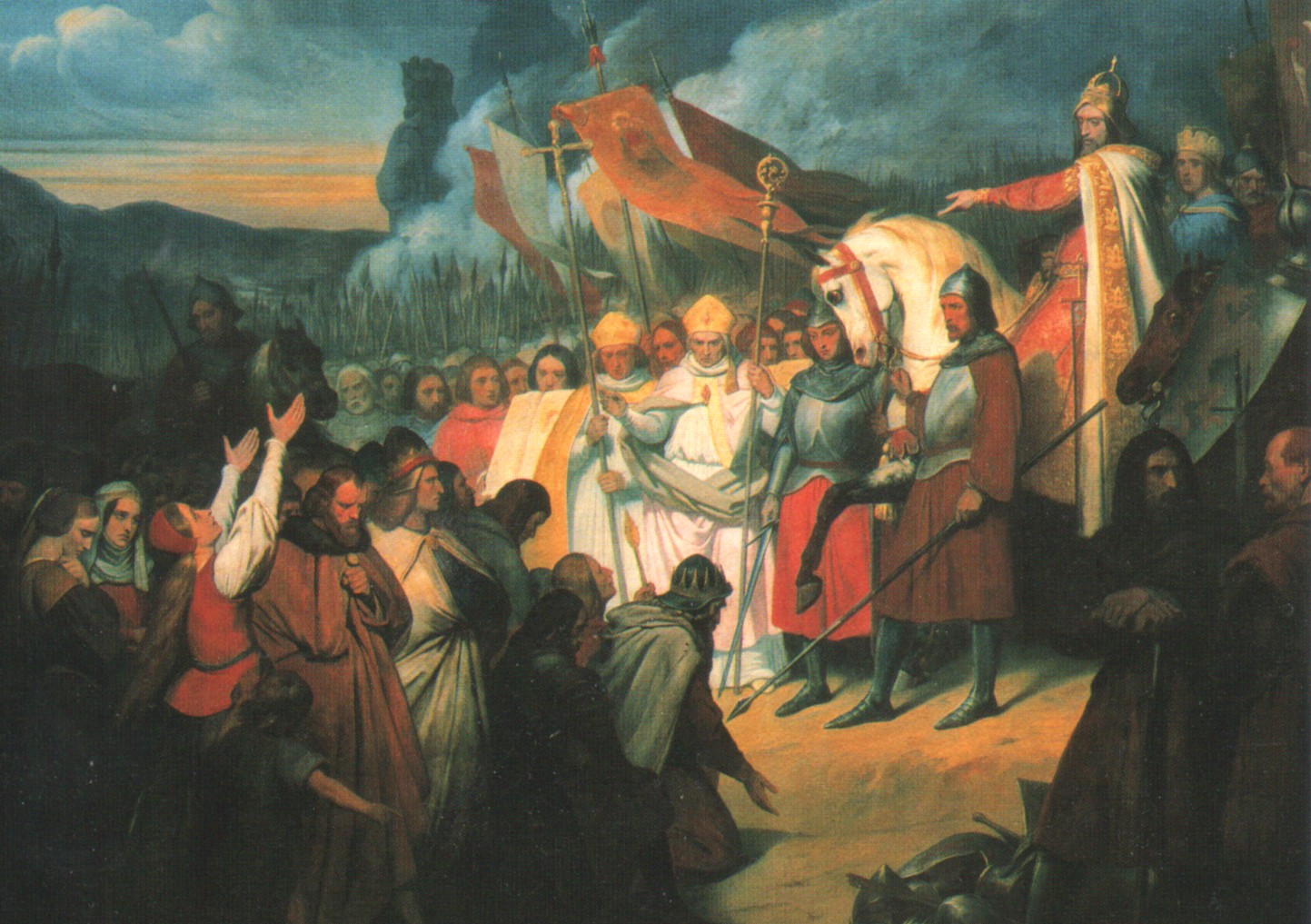
ary_scheffer_charlemagne_recoit_la_soumission_de_widukind_a_paderborn_1840

My essay “The Forgotten European: Hermann Platz’s Vision for Peace” was recently published by The European Conservative. Here’s an excerpt from the introduction:

In this day and age, when the alarms of war are once again sounding their mournful message of death—when the postwar vision of a peaceful and united Europe seems as distant as the utopian hopes surrounding the first League of Nations—it might seem strange to write about an obscure German professor of Romance Languages who never held a significant public office until the last few weeks before his death. Hermann Platz was a humble man of grand ideas, yet he never lived to see even the first inklings of his plans unfold, as he died after a botched throat operation. His name has been consigned to the most obscure corner of academic history, forgotten by most of the people whose lives were shaped by his vision. Yet his message of unity and peace founded on man’s supernatural calling endures even today.

Read the whole essay here: https://europeanconservative.com/articles/essay/the-forgotten-european-hermann-platzs-vision-for-peace/

“It happens to Peoples as well as to Individuals” – Il Guelfo: Journal of Independence for the Mezzogiorno, August 2, 1910

19 Friday Jan 2024

Posted by Matthew Scarince in Christendom

≈ 3 Comments

Tags

Civilization, History, Kingdom of Two Sicilies, Legitimism, Legitimist, Nicola Montalbo

FcOmwRwWQAEN7kj

By Nicolà Montalbò

Translated by M.T. Scarince 

It happens to peoples as well as to individuals… 

When by the influence of malicious agent one has fallen into a state of torpor, atrophy, and despondency, which makes one rebellious against every noble and generous initiative –apathetic and indifferent to everything around– and lose knowledge of one’s state, in no condition to distinguish the true from the false, the good from the evil, it sometimes happens that, for one reason or another, by some intrinsic or extrinsic force a certain shock takes place in the organism. Then the torpor comes to an end and a remarkable reaction overtakes the individual. Excitement succeeds atrophy, lethargy is replaced by impulsiveness, indeed, insomnia. And if during the period of organic numbness, the feelings of honor and self-esteem have not been totally lost the waking individual feels horror of himself and the life he has lived to that point, and gives himself to repairing his past.

Thus it is with peoples: In a moment of unconsciousness or under the nightmare of deceptive mirages, a people can fall into a lethargic state and become prey to the first daring and reckless rogue who happens to know how to take advantage of a state of daze or torpor, to impose a heavy yoke on them, to dishearten and debase them, to crush with the iron foot every vestige of freedom and stifle every cry for independence. As long as the lethargic state lasts and atony invades the fibers of the organism of that people, the rogues succeed: the pain of wounds is not felt nor the shame of vituperation. But if the awakening takes place, if the fibers are shaken and the nerves shudder, the people regain consciousness of themselves and their worth, raise their heads, shake off the yoke, invoke their rights, claim their freedoms, drive out the rogues, reclaim their independence, return to those who are the highest expression of this independence, its brightest symbols; invoke those who with freedom and independence can restore their peace, prosperity, and splendor.

Such is the state of our people today: this our Mezzogiorno of Italy, which is awakening from its long torpor and is regaining awareness of its value, of its rights.

In vain do professional enchanters resort to their arts, their spells, to put him to sleep once again; in vain they prepare new soporifics for him with rejoicings and commemorative parties, with madness and revelry, with lying and deceitful re-enactments.

It’s worse: their cacophony hurts him, increases the tension of his nerves, produces new shocks, new abhorrence of the current state of things: the present is there, before his eyes, in all its horror; the past is placed before his mind in all its enticements, in its radiant brightness of all the goods, of all the riches, of all the happiness that the Glorious Dynasty of Charles III brought to our lands.

From this dynasty, which for one hundred and twenty-six years made the joys and sorrows of the southern people of Italy its own and gave it all of itself, is the worthy heir and descendant His Excellency the Count of Caserta Don Alfonso Maria of Bourbon, for whom August 2 marks his Name Day.

Not with the fluttering of flags unfurled in the wind, nor with cannon shots echoing over the sea of Parthenope and along the valleys and slopes of burning Vesuvio, nor in the thousand little flames seen from the windows and balconies of the homes of our Naples but in the hearts the people of the South we celebrate this day.  

This is a celebration entirely of sentiment, respectful love, profound devotion, dear memories, and immense admiration for the sublime civil and military virtues, for the excellent qualities of mind and heart that adorn the person of the august Head of the Royal House of Naples. This celebration today and our best wishes for his health and for his happiness come from our hearts. Our thoughts fly to him, mindful of a past of homeland glories and greatness, and on him, on his Royal Consort, on the entire Royal Family we implore blessings and favors from God and the cessation of the evils that afflict our native land.
New Essay at New Polity: “Pagan Laws and the People of God”

19 Sunday Nov 2023

Posted by Matthew Scarince in Christendom

≈ 6 Comments

Tags

christendom, Classical Legal Tradition, Modern State, New Polity, Paganism, People of God, Political Philosophy, Political Theology

Screen+Shot+2023-11-17+at+11.33.47+AM

New Polity: A Journal of Postliberal Thought recently published my essay “Pagan Laws and the People of God.” Here is an excerpt from the introduction, you can read the whole essay by purchasing the issue or subscribing to the journal here.

The dawn that dispelled the horrendous night that morn
Was not a Sabbath of rest but a Saturnalia of sorrow
The impious demon rejoiced in seeing the breach of peace between brothers
There never was greater slaughter, nor field so full of war
The laws of Christendom are turned into a rain of blood.
Thus the gluttony of Cerberus pleases the infernal powers.

— Angelbert, Versus de bella que fuit acta Fontaneto

These poignant verses describe the aftermath of the Battle of Fontenoy, a decisive moment in the fratricidal war between the three grandsons of Charlemagne. In the eyes of the Frankish poet, the order of the Lex Christianorum—the reign of peace—had given way to the old blood-soaked anarchy of paganism; the divinely instituted leisure of the Sabbath had yielded to a Saturnalia of debauchery. These verses could equally well describe the situation of Catholics in the modern administrative state, a model of state which has come to dominate the political life of many countries. The atrocities of the modern state are without number; for example, in America, until very recently, this form of state sanctioned at its highest levels the mass destruction of innocents in the womb. A growing school of postliberal “juridical thinkers” blame our moral and spiritual decay on the refusal to ground our law in the “Classical Legal Tradition.” They claim that the basic apparatus of the modern state is merely abused; politicians educated in the tradition of classical legal thought can and should adopt “the apparatus of the administrative state” to successfully adapt and adjust “broad positive instruments to changing social, economic, and technological circumstances.” This claim (and the booming juristic community that has rallied around it) lacks any sense of the traditional perspective which pits Catholic society and the Western European tradition of governance against the depredations of the pagan civilizations that it converted and conquered. From this perspective, the modern administrative state has revived the despotism of the pagans.

The full essay can be found in the print issue of New Polity Volume 4 Issue 3. 

The Last World Emperor: A Review of Charles V by Dr. Otto von Habsburg

16 Monday Oct 2023

Posted by Matthew Scarince in Christendom

≈ Leave a comment

Tags

Age of Discovery, Book Review, Charles V, christendom, Holy Roman Emperor, Holy Roman Empire, Kingdom of Spain, New World, Otto von Habsburg

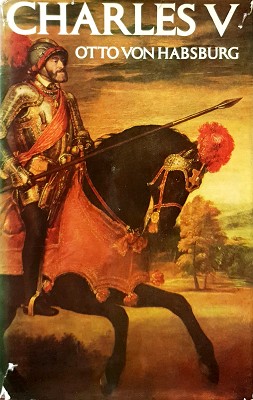
Otto von Habsburg, Charles V, trans. Michael Ross (London: Weidenfeld and Nicolson, 1970)

31347027086

Born on the eve of the cultural and political upheaval of the sixteenth century, Charles V inherited a vast and wide-reigning authority as King of Spain and Holy Roman Emperor that few men in history have ever rivaled. Dr. Otto von Habsburg, a descendant of Charles and heir of the last Habsburg emperor, prefaces his renowned ancestor’s 1967 biography by stating “later centuries were incapable of grasping Charles V’s conception of the world.” Nevertheless, Habsburg argues that challenges facing Europe in the present day are similar enough to the cultural revolution of the sixteenth century that “Charles V, once regarded as the last fighter in a rearguard action, is suddenly seen to have a been a forerunner.” Throughout the book he explores the relevance of the deeply Catholic and chivalric vision of Christendom that motivated Charles’ reign. It might seem easy to accuse the author of a favorable bias towards his subject, an accusation from which the book is not entirely immune. However, such an accusation ignores the real awareness of Charles’s vision that Habsburg gains from his concrete understanding of his own familial tradition. Otto von Habsburg’s Charles V offers a brilliant insight into the world and worldview of the history-shaping emperor, yet its lack of primary source citations and heavy reliance on secondary sources render it more of an introduction to its subject, and not, as seems to have been intended, an analytic biography.

Continue reading →

Looking to the West: A Brief Study of Tolkien’s Carolingian Heritage

28 Thursday Sep 2023

Posted by Matthew Scarince in Christendom

≈ Leave a comment

Tags

Carolingian Empire, Charlemagne, christendom, Holy Roman Empire, J.R.R. Tolkien, The Lord of the Rings, The West

Halls of Manwe - J.R.R. Tolkien

Upreared from sea to cloud then sheer
a shoreless mountain stood;
its sides were black from the sullen tide
up to its smoking hood, 
but its spire was lit with a living fire
that ever rose and fell:
tall as a column in High Heaven’s hall,
its roots were deep as Hell;
grounded in chasms the waters drowned
and swallowed long ago
it stands, I guess, on the foundered land
where the kings of kings lie low

-J. R.R. Tolkien, Imram (The Death of St. Brendan) 

Each of the subcreative works of J.R.R. Tolkien displays a careful and thoughtful attention to the cultures and civilizations which populate his secondary reality. He drew deep and rich realities from the history of the Primary World and studying his invented histories can illuminate both philosophical and macro-historical themes with which Tolkien engaged. In particular, investigating Tolkien’s use of the West as a civilizational concept in his novel The Lord of the Rings, written between 1937 and 1954, reveals his appropriation of the Carolingian heritage of Europe, which transformed the work from what was originally intended as a “mythology for England” into what Bradley Birzer calls “a myth for the restoration of Christendom itself.” This appropriation was controversial, especially during the Second World War when the National Socialists in Germany attempted to usurp this European heritage for themselves. A close reading of The Lord of the Rings reveals the parallels between Tolkien’s restored Kingdom of the West and the Carolingian Holy Empire, the West as a source of spiritual renewal, and Tolkien’s defense of Western mythology against the Nazi usurpation of the European tradition.

Continue reading →

New Essay: “Ruled by Different Rhythms”

22 Thursday Jun 2023

Posted by Matthew Scarince in Christendom

≈ 1 Comment

Tags

Augusto Del Noce, Basilicata, Carlo Levi, Culture, Film, Francesco Rosi, Genealogies of Modernity, Modernity, Personalism, Politics, Totalitarianism

Gagliano_1

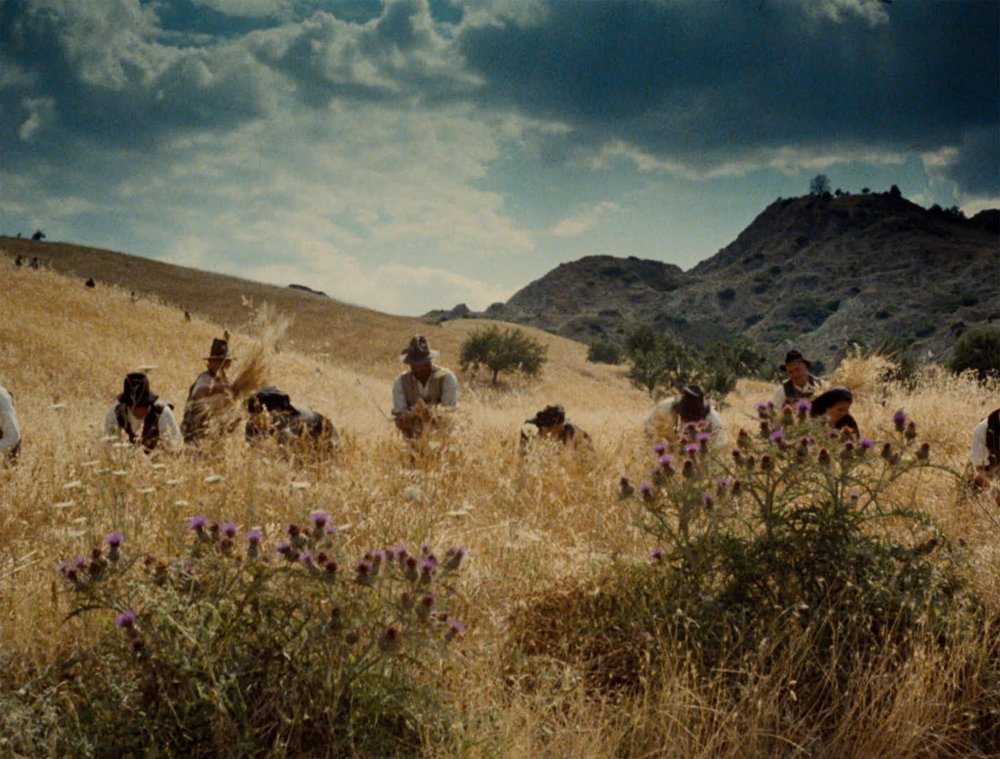
My second essay for the journal Genealogies of Modernity, “Ruled By Different Rhythms” was just published. In this essay I continue to explore the philosophical conversation between writer Augusto Del Noce and filmmaker Francesco Rosi with his film adaptation of Carlo Levi’s autobiographical book, Christ Stopped at Eboli. Here’s an excerpt:

“Christ never came here,” writes Carlo Levi, describing the desolate village of Gagliano in the hinterlands of southern Italy to which he was exiled in 1935. “Christ stopped along the coast, at Eboli.” Internal exile is a strange concept in the digital age. For a generation raised with the global reach of the internet, to whom landscapes are defined by interstate highways and airports rather than by hills and villages, this technique of isolating a political opponent seems absurd and trivial. Francesco Rosi begins his four-part TV miniseries adaptation of Levi’s year of exile (Christ Stopped at Eboli, 1979) by emphasizing his isolation: though constantly escorted, Levi is alone, his light grey suit of a fashionable cut standing out against the unrelenting black clothing of the Lucanese peasants and the dark overcast sky. They are visible only in their poverty; they are, as Rosi’s contemporary and fellow director Vittorio De Seta once titled them, “the Forgotten.” And to the inhabitants of Basilicata (ancient Lucania), the doctor from Turin is a foreigner in their forgotten country.

Read the whole essay here: https://genealogiesofmodernity.org/journal/2023/6/21/ruled-by-different-rhythms

New Essay on Augusto Del Noce

26 Friday May 2023

Posted by Matthew Scarince in Christendom

≈ Leave a comment

Tags

Augusto Del Noce, Civilization, Culture, Film, Francesco Rosi, Genealogies of Modernity, Modernity, Scientism

Giuliano

The journal Genealogies of Modernity has recently published my essay The Occupation That Never Ended, exploring the thematic and philosophical relationship between Augusto Del Noce’s The Crisis of Modernity and Francesco Rosi’s film Salvatore Giuliano. Here’s an excerpt:

Rosi’s film was released in 1962, nearly a decade before the Italian philosopher and political theorist Augusto Del Noce first published his scathing critique of the modern approach to power politics. Like Rosi, Del Noce is also investigating a corpse, but not that of a single man or mere individual. The body which fascinated the philosopher is the political community, slowly dissected by a new, “scientific” approach to politics.  He saw in this approach the danger of a subtler form of totalitarianism, in which “the individual is extinguished and the idea of politics is subsumed within the idea of war, even in peacetime.” This war is not aimed, as were older forms of totalitarianism, at founding or reshaping the world order. Rather, it is directed at the perfect control of a single society, a society without the divisions caused by loyalties to family, to faith, and to traditional forms of morality. Any resistance to the regime’s absolute centralization of control is characterized as a revolt against science and progress.

Read the whole essay here: https://genealogiesofmodernity.org/journal/2023/5/23/the-occupation-that-never-ended

← Older posts

S. Mauritius

Categories

  • Christendom
  • HRM Archive
  • Random Days
  • The World of THE WAR FOR CHRISTENDOM
  • Tower of Ivory

Archives

  • Matthew Scarince's avatar
  • The Imperial Traditionalist's avatar

Copryright Notice:

Written Content of this site (unless otherwise attributed) ©2015-2024 Center for Legitimist Documentation

Create a website or blog at WordPress.com

  • Subscribe Subscribed
    • The War for Christendom
    • Join 92 other subscribers
    • Already have a WordPress.com account? Log in now.
    • The War for Christendom
    • Subscribe Subscribed
    • Sign up
    • Log in
    • Report this content
    • View site in Reader
    • Manage subscriptions
    • Collapse this bar
 

Loading Comments...