Tags
Age of Discovery, Book Review, Charles V, christendom, Holy Roman Emperor, Holy Roman Empire, Kingdom of Spain, New World, Otto von Habsburg
Otto von Habsburg, Charles V, trans. Michael Ross (London: Weidenfeld and Nicolson, 1970)
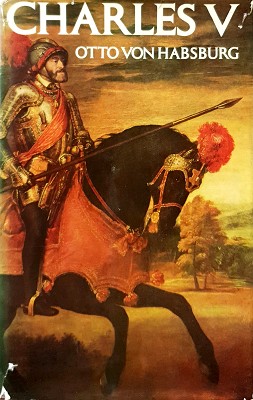
Born on the eve of the cultural and political upheaval of the sixteenth century, Charles V inherited a vast and wide-reigning authority as King of Spain and Holy Roman Emperor that few men in history have ever rivaled. Dr. Otto von Habsburg, a descendant of Charles and heir of the last Habsburg emperor, prefaces his renowned ancestor’s 1967 biography by stating “later centuries were incapable of grasping Charles V’s conception of the world.” Nevertheless, Habsburg argues that challenges facing Europe in the present day are similar enough to the cultural revolution of the sixteenth century that “Charles V, once regarded as the last fighter in a rearguard action, is suddenly seen to have a been a forerunner.” Throughout the book he explores the relevance of the deeply Catholic and chivalric vision of Christendom that motivated Charles’ reign. It might seem easy to accuse the author of a favorable bias towards his subject, an accusation from which the book is not entirely immune. However, such an accusation ignores the real awareness of Charles’s vision that Habsburg gains from his concrete understanding of his own familial tradition. Otto von Habsburg’s Charles V offers a brilliant insight into the world and worldview of the history-shaping emperor, yet its lack of primary source citations and heavy reliance on secondary sources render it more of an introduction to its subject, and not, as seems to have been intended, an analytic biography.


 The War for Christendom