Tags
Augusto Del Noce, Basilicata, Carlo Levi, Culture, Film, Francesco Rosi, Genealogies of Modernity, Modernity, Personalism, Politics, Totalitarianism

My second essay for the journal Genealogies of Modernity, “Ruled By Different Rhythms” was just published. In this essay I continue to explore the philosophical conversation between writer Augusto Del Noce and filmmaker Francesco Rosi with his film adaptation of Carlo Levi’s autobiographical book, Christ Stopped at Eboli. Here’s an excerpt:
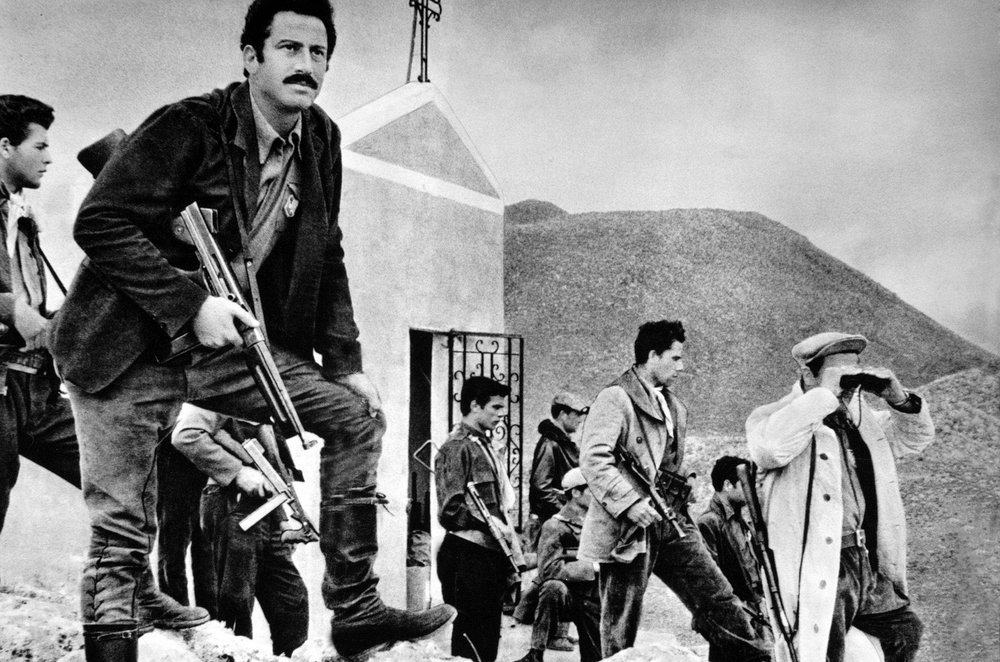
“Christ never came here,” writes Carlo Levi, describing the desolate village of Gagliano in the hinterlands of southern Italy to which he was exiled in 1935. “Christ stopped along the coast, at Eboli.” Internal exile is a strange concept in the digital age. For a generation raised with the global reach of the internet, to whom landscapes are defined by interstate highways and airports rather than by hills and villages, this technique of isolating a political opponent seems absurd and trivial. Francesco Rosi begins his four-part TV miniseries adaptation of Levi’s year of exile (Christ Stopped at Eboli, 1979) by emphasizing his isolation: though constantly escorted, Levi is alone, his light grey suit of a fashionable cut standing out against the unrelenting black clothing of the Lucanese peasants and the dark overcast sky. They are visible only in their poverty; they are, as Rosi’s contemporary and fellow director Vittorio De Seta once titled them, “the Forgotten.” And to the inhabitants of Basilicata (ancient Lucania), the doctor from Turin is a foreigner in their forgotten country.
Read the whole essay here: https://genealogiesofmodernity.org/journal/2023/6/21/ruled-by-different-rhythms

 The War for Christendom